STYLISA FoundHers May: Joanna Maiden on Building a Fashion Business That Puts People First
Updated: Jul 24
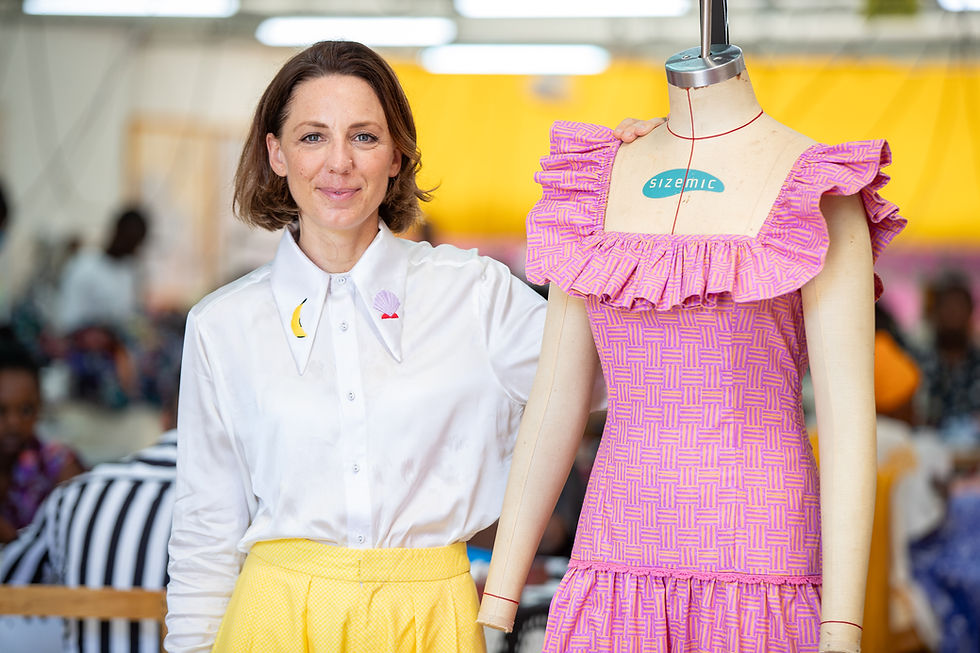
What does it really take to build a business that balances purpose, people, and profit without compromise? For Joanna Maiden, the answer hasn’t come through grand gestures or perfect plans, but through a series of small, intentional decisions made over time. As the Founder and CEO of SOKO Kenya, Joanna has built a clothing manufacturing business that centres dignity, sustainability, and long-term impact. In this conversation, she shares the thinking behind the model, the realities of scaling ethically, and why putting people first is not a trade-off, but a strategy.
From London to Kenya. That’s a bold move. What changes in mindset and courage did it take to uproot your life and build a business on the other side of the world?
I don’t think I realised at the time just how bold a move it was. Looking back, it’s clear how much courage it took, but in the moment, it was simply one small brave step after another. That’s really how the journey has unfolded: not in giant leaps, but through steady, intentional decisions over time.
In terms of mindset, I’ve had to embrace not being afraid to try. To give things a go, even if they don’t work out. And to hold those outcomes lightly, knowing that something not working isn’t failure, it’s part of the process. I think that openness to uncertainty, and willingness to keep going regardless, has shaped how SOKO Kenya has grown.
You mention a deep early sense of injustice and privilege. How have these personal values influenced how you lead and grow organisations today?
Growing up, I was aware, uncomfortably so, of how different my experience was compared to so many other children. I wouldn’t necessarily use the word “privilege” now, because it tends to focus on separation, and I try not to look at the world through that lens anymore. For me, it’s not about the differences, it’s about the opportunities we can create together.
That mindset has become central to how I lead. Rather than talking about problems or disparities, I’m more interested in asking: what solutions can we bring? How can we use business as a force for good?
At SOKO Kenya, that translates into tangible action: ensuring living wages, supporting female leadership, building a workforce where the majority are women, and offering training and development through our in-house programmes and community trust. Our charity, the Kujuwa Initiative, tackles period poverty and provides reproductive health education. But beyond any single project, it’s about creating the conditions for people to thrive, not just survive.
That means childcare, fair pay, financial literacy, and access to education. These are things we all need. I’ve just had easier access to them in my life, and the aim is to make sure others have that same chance, too.
Running a business with both purpose and profit means tough trade-offs. Can you share a time when your values were tested, and what guided your decision?
One of my favourite ways to describe it is that I’m responsible with money, but passionate about people. To survive in business, you have to keep looking at the numbers and make solid decisions that keep things moving forward, but that can never come at the expense of our values.
There have definitely been moments where potential clients have pushed hard on price. And while there’s sometimes room to explore flexibility, there are core parts of how we operate that we simply won’t compromise. If we can’t meet in the middle, it usually means we’re not aligned, and that’s okay.
Of course, we have a responsibility to keep improving and to be as efficient and competitive as possible in what is a very price-sensitive industry. But we won’t do that by cutting the things that matter most. We’ll always provide meals for our team. We’ll always offer free childcare, access to a company doctor, and contribute to a pension scheme. Our minimum contribution is 1%, because our commitment is to support our team into their future and not just while they’re working with us.

What’s a daily or weekly habit that keeps you grounded as a global business leader and community advocate?
Lately, I’ve been really intentional about creating more balance in my life. I’ve recognised how easy it is to fall into cycles of toxic productivity, and how important it is to prioritise wellbeing, not just for myself, but as something I hope to model for my team.
That looks like making time for movement, whether it’s strength training, walking, or just being in my body. I try to build in space for rest, reflection, meditation, and journaling. It’s not always perfect, but the habit of pausing, checking in, and choosing balance over burnout is something I’m working on. Because to lead well and live well, that foundation is essential.
Looking back to your early days at SOKO Kenya, how have you changed as a leader, and what’s been the most significant lesson along the way?
In the early days, I started with four people, so it was incredibly hands-on. I had no background in manufacturing, no formal business or people management training, and I’d never lived in Africa before, so it was a steep learning curve from the start.
There were definitely moments of imposter syndrome, wondering, “What am I doing?” But over time, I’ve learned that I don’t need to do it all. In fact, the most important shift has been stepping back from the day-to-day and focusing on building strong, capable teams around me. People who are not only brilliant at what they do, but who love the parts of the business that aren’t my strengths.
That’s been the biggest lesson: that good leadership isn’t about having all the answers, it’s about creating the right environment and trusting the people around you to help shape it.
I’ve also come to understand the importance of honouring different seasons, there are times for building solid foundations, and times for letting go of what no longer serves. Growth has meant staying curious, adapting through discomfort, and making brave choices even when the path ahead isn’t clear. Letting go of old leadership habits, like feeling I have to solve every problem myself, has made room for new perspectives and stronger, more empowered teams.
SOKO Kenya started with just four employees. Now you have 150 in a solar-powered, self-sufficient factory. What has that growth taught you about scaling ethically and sustainably?
Sustainability is woven into everything we do, and putting people at the heart is in our DNA. Our solar panels provide 75% of our energy, Rainwater harvesting helps us reduce reliance on external water sources, supporting a self-sufficient system for drinking, steaming, and cleaning and we repurpose our fabric waste into reusable sanitary pads for our charity Kujuwa Initiative tackling period poverty in communities around our factory.
But what scaling has really taught us is that growth doesn’t have to come at the expense of ethics or the environment. As we’ve grown from four to 150 employees, we've remained intentional, creating safe, dignified jobs and investing in the long-term wellbeing of our team. 80% of our workforce are women, and we’re focused on empowering them not just through employment, but through training, up-skilling, and leadership opportunities.
We've learned that the more you grow, the more important it is to stay rooted in your values. t's your people who carry your mission forward and scaling sustainably means thinking long-term, listening closely, and building systems that work for both people and planet.
You’ve built everything from solar power to rainwater harvesting and free childcare into your operations. Which initiative are you most proud of and why?
The initiative I’m most proud of is the introduction of a backdated private pension scheme for all our employees. We already pay a living wage, calculated using the Global Living Wage Coalition’s Anker Methodology based on real-life costs like food, housing, education, healthcare, and family needs. But I didn’t want our commitment to stop at the factory gate. I wanted to support long-term financial security, so that retirement doesn’t mean falling back into poverty.
Also moments like Michelle Obama wearing one of our garments have been surreal and exciting. But honestly, the most meaningful moments are often quiet ones: watching our team grow, seeing someone graduate from our training programme and get hired, or knowing that we've created structures that truly support people’s futures. That’s the kind of impact I’m proudest of.

The Kujuwa Initiative turns fabric waste into washable sanitary pads, tackling period poverty head‑on. How did this idea come about, and why is it so close to your heart?
We started learning from our own employees about the challenges their daughters were facing such as the lack of access to menstrual products, missing school, and navigating stigma around periods. That’s what sparked the Kujuwa Initiative which means Knowledge in Swahili.
It began as a great way to repurpose our fabric waste, but the real impact has come through pairing the pads with education. Our outreach team doesn’t just distribute products, they run sessions in schools and in the community on menstrual health management, rights and confidence-building. That combination has been incredibly powerful.
So far, we’ve donated over 30,000 pads, and seeing the difference this makes with girls staying in school, understanding their bodies, and feeling supported is so rewarding. Kujuwa Initiative is a natural extension of SOKO Kenya’s mission to use fashion as a force for good.
With global brands like ASOS and Wales Bonner as clients, how have you maintained your factory’s integrity while meeting international standards?
Our values have always guided how we work. From day one, it’s been about building a business that puts people and planet first. Working with global brands has been part of our journey from the beginning, but as we’ve grown and partnered with clients who require certifications like Sedex SMETA, it’s pushed us to formalise the way we already operate.
That’s actually strengthened our integrity, not challenged it. It’s helped us turn instinctive practices into clear policies and build structure around the things we’ve always believed in. Through that process, we’ve been recognised by Sedex for going above and beyond in areas like fair pay, support for mothers, on-site childcare, and daily meals for staff.
Maintaining our integrity has meant staying true to our values while meeting international standards, not compromising, but proving that ethical, people-first manufacturing can meet the highest expectations.
You’ve invested in a Stitching Academy, pension schemes, financial literacy and medical care. How do these broader social investments benefit both your team and your business?
Being an ethical employer isn’t just about paying fair wages. It’s about embedding care into the culture of the business. When we invest in things like pension schemes, financial literacy, and medical care, we’re supporting our team in a way that extends beyond their time with us. It’s about helping people build stability, so they don’t fall back into poverty when they move on.
That kind of holistic support creates a positive environment, people feel secure, valued, and able to thrive. And when that happens, it naturally strengthens the business.
Our Stitching Academy, which sits under the SOKO Community Trust, is a separate initiative focused on training people in the wider community. It creates new opportunities beyond our walls and contributes to broader social impact.
What is your vision for SOKO Kenya’s future, both as a factory and as a force for social change?
We’re proving that fashion can be a force for good. The industry is shifting, brands and consumers are demanding greater transparency, and ethical production is no longer a niche concept. Our goal is to continue leading by example, showing that responsibility and success can go hand in hand.
For women building purpose-driven businesses, what advice do you have about staying true to your mission while pursuing growth and sustainability?
You don’t need to have all the answers from the start, but you do need to stay open. Listen, learn, and be willing to adapt. Staying true to your mission means making decisions rooted in your values, even when it’s not the easiest or fastest route. Focus on building with integrity, quality over quantity, purpose over pressure.
It’s not always easy, making tough decisions, taking brave steps, and facing the challenges that come with building a business rooted in values. But this is what it really looks like when you're working toward a future for fashion that’s grounded in equity, inclusion, and long-term thinking.
Surround yourself with partners who believe in what you’re building and hold you accountable to it. I’ve seen firsthand what’s possible when we put people first, and I know that a different future isn’t just a dream, it’s already happening, even when it feels incredibly tough. The right kind of growth, the kind that lasts isn’t separate from your mission. It comes because of it.
A massive thank you to Joanna Maiden, for agreeing to be interviewed and becoming a part of the STYLISA FoundHers community. If you’re interested in finding out more about her work:
Visit Soko Kenya's website: https://www.soko-kenya.com
Discover The Kujuwa Initiative: https://www.soko-kenya.com/kujuwainitiative
Connect with Joanna on LinkedIn
With thanks to Terser Adamu and the Unlocking Africa podcast for the introduction.


Comments