STYLISA FoundHers June: Dr Elsa Zekeng on Why the Future of Medicine Must Include Everyone
Updated: Jul 24
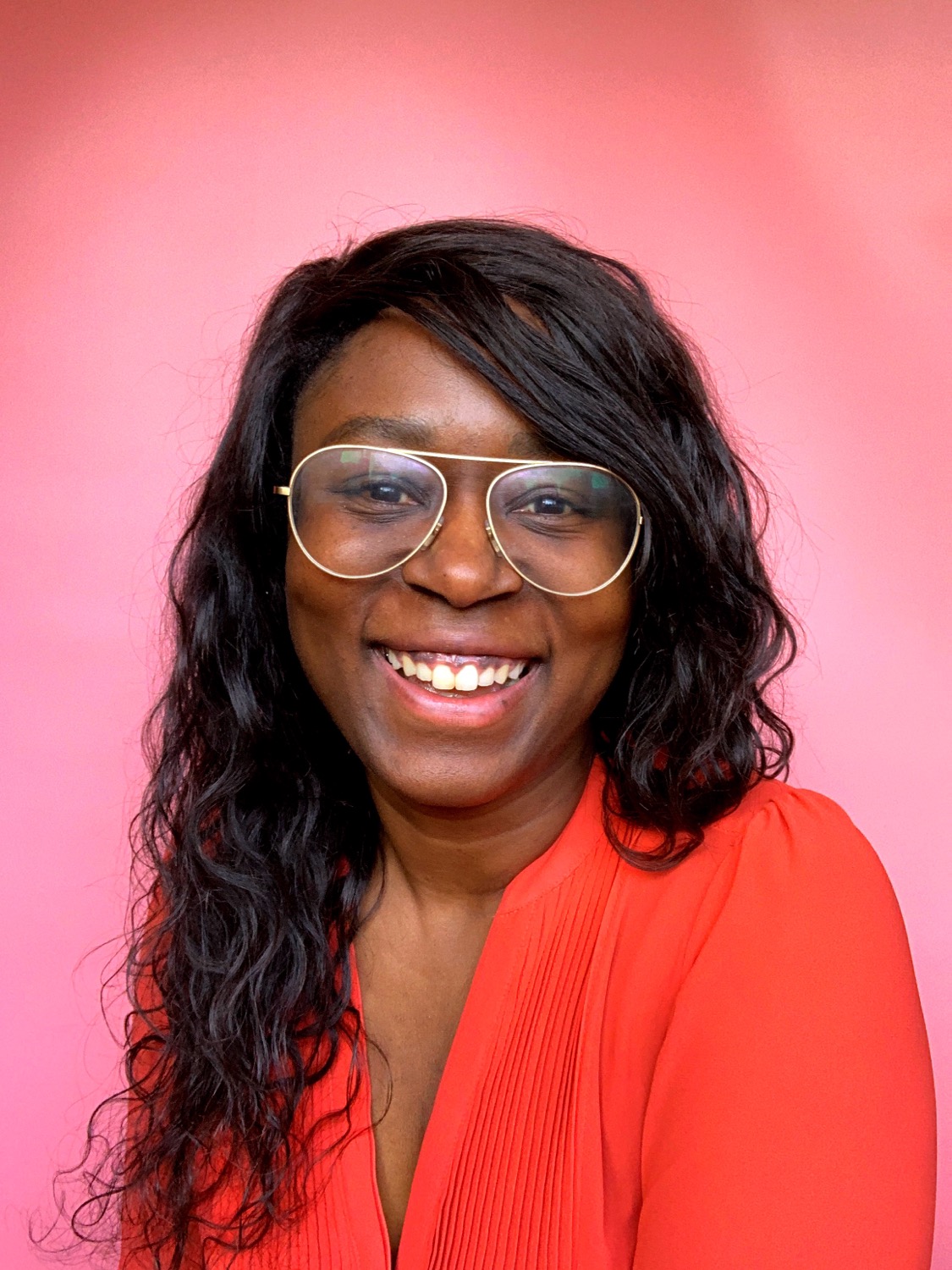
Science shapes the future. From the medicines we take to the treatments we trust, the data behind modern healthcare has the power to save lives. Yet for decades, one uncomfortable truth has remained largely unspoken: much of that data has not represented everyone equally. Dr Elsa Zekeng is working to change that. As the founder of SökerData, she is building technology designed to improve representation in biomedical and clinical research, helping ensure that the future of medicine reflects the diversity of the people it is meant to serve. In this conversation for STYLISA FoundHers, Elsa reflects on her journey into STEM, the realities of building as a Black woman in health tech, and why representation in data matters more than ever.
Please note: A glossary of key terms and acronyms used in this interview is included at the end of this interview, for ease and clarity.

Let's start at the beginning. What first drew you to science, and at what point did you realise that research and innovation could become your life's work?
I was the kind of child who needed to know why. Not just what things were, but what drove them, what connected them. Science was the only space where that curiosity felt at home. And for me, it was never purely academic - my father, Dr. Léo Zekeng, was a major figure in the fight against HIV/AIDS in Africa. I grew up watching health crises unfold in communities that looked like mine, and I had this instinct early on that the answers weren't beyond reach - they just weren't being directed at the right questions.
That instinct became concrete early. By 17, I was already involved with UNICEF, the International Organisation for Migration, and the International Community of Women Living with HIV/AIDS. At 16, I volunteered with the Society of Women Living with AIDS in Africa, in Ghana. Sitting with those women, I saw up close the shortage of ARV drug access across African countries - and the toll of the side effects on the ones who did have access. That experience lodged itself in me. It made the abstract personal, and the personal urgent.
By 21, I was interning at a biotech company in Manchester, running simulations to identify the most effective chemotherapy drug for specific cancers. That was the moment I understood that no two tumours are alike - and that without that experience, I would not be where I am today. It made me understand the importance of a personalised approach to medicine. The line from that lab to SökerData is straighter than it might look.
The moment it became a life's work? Guinea, 2015. I was deployed during the West African Ebola outbreak, working alongside WHO and Public Health England. That was the first time I understood that science isn't just intellectual - it's life and death, and who gets the benefit of it is a choice. I came home different. I came home knowing this was mine to do.
Your career has taken you from working with major global institutions to founding SökerData. What was the moment that made you decide to build something of your own?
There wasn't one single moment - it was an accumulation. Working with large institutions, I kept encountering the same wall: the data we were using to make decisions simply didn't reflect the populations bearing the greatest burden of disease. I'd raise it. People would nod. Nothing would move.
At a certain point, waiting for permission to fix something that I could see clearly felt like the wrong choice. My PhD research had given me the scientific foundation. The Ebola deployment had given me the urgency. What I needed was to build the infrastructure that didn't yet exist. So I did.
I want useful, accessible science that directly benefits people. If our discoveries remain confined to an elite, we miss the point. Innovation must reach everyone - otherwise it loses its meaning. That's what SökerData is built on.
What problem were you seeing in healthcare and research that convinced you SökerData needed to exist?
The drug development pipeline runs on data. And that data - historically and still today - over-represents white men. Women weren't even mandatorily included in clinical trials until 1993. African and ethnic minority populations remain dramatically under-represented in genomic and clinical studies - less than 2% of sequenced genomes come from Africans or people of Afro-descendant descent. So when you develop a drug, or a diagnostic, or an AI model, you're building on a foundation with structural holes.
Part of that is a scientific problem. Part of it is a trust problem. The lack of patient engagement in research among minority communities is directly linked to historical exclusion and broken trust - and that absence then compounds the data gap further. We are misdiagnosed, treated with drugs that are often ineffective or dangerous. SökerData exists to correct this.
Those holes show up in bodies. The MHRA flagged a high rate of adverse events in women of childbearing age on GLP-1 medications. That data wasn't in the original trials. It emerged later, in real-world use. We can't keep discovering these gaps after the fact. SökerData is the infrastructure to find them first.
But this isn't only about fixing past failures - it's about where the world is going. By 2030, 1 in 4 people will be of African origin, and nearly 42% of the world's youth will call the continent home. The African pharmaceutical market is projected to hit $75 billion by 2030 - yet the drugs being sold into that market are still being developed using data that ignores African biology. If your precision medicine only works for a shrinking minority of the global population, it isn't precise - it's obsolete.
Pharmaceutical companies are beginning to understand this. To be a leader in 2030, they need data from the populations that will define that era. That is exactly what SökerData is securing right now. We're not catching up to the future - we're providing the roadmap for the next great frontier in health tech.

SökerData focuses on improving representation in biomedical and clinical data. For readers who may be unfamiliar with this issue, why does representation in medical data matter so much?
Put simply: medicine works best when it was developed using data from people like you. If you're not in the dataset, you're an assumption.
The drug development pipeline runs on data. And that data - historically and still today - over-represents white men. Women weren't even mandatorily included in clinical trials until 1993. African and ethnic minority populations remain dramatically under-represented in genomic (5-10%) and clinical studies. So when you develop a drug, or a diagnostic, or an AI model, you're building on a foundation with structural holes.
Those holes show up in bodies. The MHRA flagged a high rate of adverse events in women of childbearing age on GLP-1 medications. That data wasn't in the original trials. It emerged later, in real-world use. We can't keep discovering these gaps after the fact. SökerData is the infrastructure to find them first.
But this isn't only about fixing past failures - it's about where the world is going. By 2030, 1 in 4 people will be of African origin, and nearly 42% of the world's youth will call the continent home. The African pharmaceutical market is projected to hit $75 billion by 2030 - yet the drugs being sold into that market are still being developed using data that ignores African biology.
Pharmaceutical companies are beginning to understand this. To be a leader in 2030, they need data from the populations that will define that era. That is exactly what SökerData is securing right now. We're not catching up to the future - we're providing the roadmap for the next great frontier in health tech.
Biomarker selection - knowing which biological signals predict disease or drug response - doubles the likelihood of a drug making it through development. But those biomarkers vary across populations. If your training data is 90% European ancestry, your model is accurate for that 90% and guessing for everyone else. In cardiovascular disease, in breast cancer, in the conditions disproportionately affecting women and ethnic minorities, that guesswork has real consequences. We're talking about missed diagnoses, ineffective treatments, and avoidable deaths.
Our goal is clear: to become the global benchmark in health data for women and ethnic minorities. We want to create a world where personalised treatment is no longer reserved for a privileged few, but accessible to all.
Research shows that people of African ancestry remain significantly under-represented in genomic and clinical studies. What are the real-world consequences of that imbalance?
IThe consequences are already here. Less than 2% of sequenced genomes come from Africans or people of Afro-descendant descent. Polygenic risk scores - the tools used to predict disease susceptibility - perform significantly worse in people of African ancestry because the studies that built them used predominantly European data. A Black woman assessed for breast cancer risk using a standard tool is being assessed with a model that wasn't built for her biology.
By 2030, a significant proportion of the global population will be of African origin. That's not just a moral argument for inclusion - it's a commercial one. Pharmaceutical companies that want access to those markets need data from those populations. The industry is beginning to understand this. SökerData exists to be the infrastructure when they do.
We are entering a moment where data and AI are beginning to shape healthcare in profound ways. What excites you most about this shift, and what concerns you?
What excites me is that the tools now exist to do what previously couldn't be done at scale. LLMs, AI-assisted drug discovery, real-world evidence platforms - the infrastructure to extract meaningful insight from diverse datasets is here. A decade ago it wasn't. That convergence is genuinely historic.
What concerns me is that we're building these systems at speed, using the same biased datasets that have always existed - and calling it progress. AI doesn't neutralise historical bias. It encodes and accelerates it. If the training data is incomplete, the model is incomplete, and we'll spend the next decade discovering that in clinical outcomes. The urgency isn't to slow down. It's to be rigorous about what we're building on.
AI is accelerating faster than our ability to understand it. When the black box fails to explain itself, there is only one source of truth left: the data. Trust in AI cannot be an afterthought - it must be engineered into the system from the start. And the most reliable path to trustworthy AI is not through better explanations of opaque models, but through the integrity, provenance, and equity of the data beneath them.
To address this directly, I am currently conducting a survey exploring how data safeguards, enables, and regulates the future of AI in health. The goal is to shape a new industry standard - one built on evidence, not assumption. If you'd like to contribute your insights, the link is here:
Your work sits at the intersection of science, technology and ethics. In your view, what does responsible leadership in data and healthcare look like today?
It means being honest about what you don't know. In healthcare, that requires discipline - because the pressure to ship, to scale, to secure the next contract can push you to paper over gaps. Responsible leadership says: we know this dataset has limitations, and here's what we're doing about them.
It also means not using "innovation" as a word that exempts you from accountability. I'd rather be slower and accurate than fast and wrong at scale. When we're talking about data that shapes clinical decisions, wrong at scale is people's lives.

As a Black woman working in STEM and building a technology company, what realities have you had to navigate that people outside the industry may not fully appreciate?
The credibility tax. Every room you walk into, there's a fraction of attention being spent assessing whether you belong there. That's energy. It's not debilitating - you learn to work with it - but it's real, and it compounds.
Africa represents 17% of the world's population, but its researchers constitute only 2.7% of the global scientific community - and only a third of those are women. I am a statistical exception. That comes with a particular kind of responsibility, and a particular kind of scrutiny.
There's also the specific challenge of building a company whose entire thesis is that the system has failed certain populations, while needing that same system - its investors, its institutions, its gatekeepers - to back you. You're asking people to fund the acknowledgement of their own blind spots. That requires a particular kind of fluency: being clear-eyed about the problem without alienating the people you need at the table.
And then there's fundraising. The data on investment into Black female founders is not subtle. You learn to be efficient, compelling, and relentless - in that order.
Representation matters. What would you say to young Black girls who are curious about science but may not yet see themselves reflected in STEM spaces?
Your curiosity is evidence enough that you belong. You don't need to wait for permission or a mirror.
I'd also say: the gaps you see aren't signs that the field isn't for you. They're signs that the field needs you. The questions that haven't been asked yet - many of them are yours to ask. That's not a burden; it's a position of extraordinary power.
Find your people early. They may not be in the obvious places - look wider. And when you make it into rooms that once felt closed, leave the door open. That part is non-negotiable.
Building a health tech company requires both resilience and vision. What have been some of the toughest lessons you've learnt as a founder?
That trust is the hardest thing to build and the easiest to underestimate. Early on, I approached communities we wanted to work with as a scientist: here's the evidence, here are the use cases, here's why this matters. They understood all of it. And many still said no. I had to learn that understanding is not the same as trust, and that trust - particularly with communities whose data has historically been extracted without benefit to them - has to be earned at a much more fundamental level than science can reach on its own.
The second lesson: pace yourself, but not in the way people usually mean it. Not slower - more deliberately. Know what you're building toward and don't let the noise of any given week make you forget it.
Looking ahead, what kind of impact do you hope SökerData will have on the future of healthcare and medical research?
The vision is clear to me: SökerData becomes the largest dataset holder for data from women and ethnic minorities in healthcare. So that when anyone is designing a drug, running a trial, thinking about market access for an ageing global population - someone around that table asks: have you checked SökerData?
The more precise version of that impact is this: a drug developed in 2035 works for the body it's prescribed to - regardless of whether that body is Black, female, or both. Right now that's not guaranteed. It should be. That's what we're building toward.
When you reflect on your journey so far, what has entrepreneurship taught you about leadership and about yourself?
That leadership is not about being the person with the answers. It's about being the person who creates the conditions for the right questions to get asked.
About myself - I've learned that I'm most effective when I'm connected to the reason behind what I'm doing. Not the pitch, not the metrics: the actual reason. For me, that's the communities who have been failed by a system that was never designed with them in mind. When I lose the thread to that, everything gets harder. When I hold it, the difficult things become navigable.
Finally, STYLISA FoundHers exists to amplify women who are building meaningful things in the world. What three pieces of advice would you give to women and girls who are thinking about starting their own business or pursuing a career in science or technology?
First: build your ecosystem before you need it. The people who will matter most to your journey - the scientists who flag datasets, the clinicians who open doors, the founders who tell you what didn't work - most of them won't arrive at a convenient moment. Cultivate those relationships now, generously and without agenda.
Second: know the difference between what the market is ready for and what it needs. They're often not the same thing. Your job is to be clear enough about the need that you can bring the market to where it should be - not just where it currently is.
Third: your lived experience is analytical data. The things you've navigated, the rooms you've had to decode, the questions you've had to hold that others didn't - those are not separate from your professional expertise. They are part of it. Don't leave them at the door.
A massive thank you to Dr Elsa Zekeng, for agreeing to be interviewed and becoming a part of the STYLISA FoundHers community. If you’re interested in finding out more about her work:
Visit SökerData website: https://www.soker-data.com
Connect with Elsa on LinkedIn
STYLISA FoundHers Glossary: June Edition
Because understanding the language is half the battle.
STEM (SCIENCE, TECHNOLOGY, ENGINEERING & MATHEMATICS)
An umbrella term used to describe disciplines and careers related to science, technology, engineering and mathematics.
Why it matters here: Women, and particularly Black women, remain significantly under-represented across many STEM industries globally. Dr Elsa Zekeng’s work sits at the intersection of science, technology and healthcare innovation, making her part of a growing generation of women reshaping what leadership in STEM looks like.
AI & TECHNOLOGY
ARTIFICIAL INTELLIGENCE (AI)
Technology that analyses data, finds patterns and makes predictions increasingly used in healthcare.
Why it matters here: SökerData's tool uses AI to detect bias in health datasets and Elsa's work asks a critical question: if the data AI learns from is skewed, whose health does it actually serve?
BLACK BOX (AI)
An AI system whose decisions are hard to explain or trace even for its creators.
Why it matters here: Transparency and explainability are at the heart of SökerData's argument: health AI must be interpretable, especially when it affects under-represented populations who are already at risk of being overlooked.
LLMs (LARGE LANGUAGE MODELS)
Powerful AI systems trained on vast text, the technology behind tools like ChatGPT.
Why it matters here: As LLMs are increasingly applied to health data, the biases within their training data become critical. SökerData's work on data representativeness is directly relevant to ensuring LLMs perform equitably.
DATA
DATA BIAS
When datasets don't reflect the full population this leads to unfair or inaccurate outcomes.
Why it matters here: This is the founding problem SökerData was built to solve. More than 87% of clinical data is Eurocentric. SökerData's tool detects and flags this bias so it can be corrected before it causes harm.
DATA EXTRACTION (IN RESEARCH)
The practice of collecting people's data for research purposes, historically without returning benefits to the communities involved.
Why it matters here: SökerData's approach is explicitly designed to counter extractive data models by building partnerships with African hospitals and institutions that share value with the communities whose data underpins the research.
DATA INFRASTRUCTURE
The systems and frameworks that allow health data to be collected, stored and used at scale.
Why it matters here: Building data infrastructure in Africa through partnerships with national bureaus, hospitals, and registries is a strategic pillar of SökerData's long-term vision.
DATA PROVENANCE
The documented history of where data came from and how it was collected and used.
Why it matters here: When SökerData analyses a clinical dataset for bias, provenance is part of the picture. So understanding the source of the data helps explain why certain populations may be over- or under-represented.
REAL-WORLD EVIDENCE
Data from everyday healthcare settings (not clinical trials) showing how treatments work in real life.
Why it matters here: SökerData's work with pharmaceutical companies is partly about generating real-world evidence, the kind of data that informs HEOR and market access strategies.
CLINICAL
ADVERSE EVENTS
Unintended or harmful effects experienced by patients during treatment.
ANTIRETROVIRAL (ARV) DRUGS
Medicines that suppress HIV, helping people live longer, healthier lives. ARV drugs do not cure HIV, but they reduce the amount of virus in the body to undetectable levels. Taken consistently, they allow people living with HIV to live long, healthy lives and dramatically reduce onward transmission. They are one of the most significant achievements in modern medicine.
CHEMOTHERAPY
Drug-based treatment that targets and destroys rapidly dividing cancer cells. Chemotherapy uses powerful medicines to kill cancer cells or stop them from growing and dividing. It is one of the most widely used cancer treatments, often used alongside surgery or radiotherapy.
CLINICAL TRIALS (AND TRIAL PHASES)
Research studies with human participants that test whether new drugs or treatments are safe and effective. Before a new drug can be used by patients, it must go through a series of rigorous studies. Clinical trials involve real people who volunteer to receive the treatment and are compared against groups receiving a placebo (an inactive substitute) or existing standard of care.
Trials happen in phases:
Phase 1: A small group of volunteers (often healthy adults) test safety and dosage.
Phase 2: A larger group tests whether the treatment works and monitors side effects.
Phase 3: Thousands of participants confirm effectiveness, monitor reactions, and compare to existing treatments.
Phase 4: Post-approval monitoring of long-term effects in the real world.
DRUG DEVELOPMENT PIPELINE
The full journey of a new drug from laboratory discovery through to patient use. Developing a new drug is a long, costly, and uncertain process. It typically starts with basic laboratory research, moves through animal studies and early human trials, progresses through larger clinical trials for safety and efficacy, and eventually reaches regulatory review before approval. The entire process can take 10–15 years and cost over a billion pounds.
GLP-1 MEDICATIONS
A class of drugs for type 2 diabetes now widely used for weight management, including Ozempic.
GLP-1 (Glucagon-Like Peptide-1) drugs were originally developed to help manage blood sugar in people with type 2 diabetes. They work by mimicking a natural hormone that signals fullness and regulates blood sugar. In recent years, they have become widely known for their effectiveness in weight loss, with brands like Ozempic and Wegovy attracting enormous public and commercial attention.
HEOR (HEALTH ECONOMICS AND OUTCOMES RESEARCH)
The field that studies whether treatments deliver value by measuring effectiveness, safety, and cost across real patient populations.
HEOR sits at the intersection of medicine and economics. It asks: does this treatment actually work in the real world, for real patients? How does it compare to alternatives? What does it cost the health system? HEOR teams within pharmaceutical companies use this evidence to make the case to regulators, payers, and health systems that a drug should be approved, reimbursed, and adopted.
MARKET ACCESS
The process by which a pharmaceutical company secures approval and reimbursement for a drug so that patients can actually get it. Developing a drug is only half the battle. Market access is the commercial and regulatory process of getting a treatment approved by bodies like the MHRA or NICE, funded by national health systems, and available to the patients who need it.
PATIENT ENGAGEMENT
Actively involving patients in research, trials, and decisions about their own care. Patient engagement goes beyond simply recruiting people into trials. It means involving patients as genuine partners in designing research studies, interpreting results, and shaping healthcare decisions. Meaningful engagement improves the relevance and quality of research, and is increasingly required by funders and regulators.
SCIENCE
BIOMARKERS
Biological signals like genes or proteins that reveal disease risk or treatment response. A biomarker is a measurable biological signal; it could be a protein in your blood, a gene variant, or a metabolic reading that tells doctors something meaningful about your health. Biomarkers help predict whether someone will develop a disease, how severe it might be, or how well they will respond to a particular treatment. Selecting the right biomarkers at the outset of drug development more than doubles the likelihood of a drug making it through the pipeline.
BIOTECH (BIOTECHNOLOGY)
Using biological systems and living organisms to develop medicines and health technologies. Biotechnology applies our understanding of living systems cells, genes, proteins to develop products with real-world applications. In healthcare, biotech companies develop new drugs, diagnostic tests, gene therapies, and the tools researchers use to study disease. Many of today's most innovative cancer and rare disease treatments come from the biotech sector.
GENOMIC STUDIES
Research that analyses a person's DNA to understand disease risk and treatment response. Genomics is the study of the complete set of genes in an organism. Genomic studies look at variations in a person's DNA to understand their risk of developing certain diseases, how their body might respond to different treatments, or how conditions are inherited.
GENOME SEQUENCING
The process of reading the complete genetic code of a person, their DNA, in full. Genome sequencing means decoding the order of the billions of chemical "letters" that make up a person's DNA. This information can reveal predispositions to disease, how a person's body will metabolise a drug, or why a cancer is behaving in a particular way.
PERSONALISED MEDICINE
Tailoring treatment to an individual's biology, rather than one-size-fits-all approaches. Personalised medicine moves away from the idea that the same drug and dose works equally for everyone. By understanding a patient's specific biology including their genetics, lifestyle, and health history, clinicians can make more targeted treatment decisions. This can mean choosing the right drug, the right dose, or predicting who is likely to respond well.
POLYGENIC RISK SCORES
A score estimating someone's genetic likelihood of developing a disease, based on multiple DNA variants. Most common diseases are not caused by a single gene mutation; they result from the combined influence of hundreds or thousands of small genetic variations. A polygenic risk score adds these up to estimate an individual's overall genetic predisposition to a condition like heart disease, diabetes, or depression.
PRECISION MEDICINE
An advanced form of personalised medicine that combines genetics, lifestyle data and clinical history. Precision medicine uses detailed, multi-dimensional data incl. genomics, proteomics, lifestyle factors, environmental exposures, and clinical history to guide treatment decisions with exceptional specificity. It represents the frontier of evidence-based care and is particularly transformative in oncology, rare diseases, and complex chronic conditions.
REGULATORY
MHRA (MEDICINES AND HEALTHCARE PRODUCTS REGULATORY AGENCY)
The UK body that ensures medicines and medical devices are safe and effective before they reach patients.
The MHRA is the UK's regulator for medicines, medical devices, and clinical trials. It reviews evidence submitted by pharmaceutical and biotech companies and decides whether a product is safe and effective enough to approve for use by patients. Post-Brexit, the MHRA operates independently from the EU's EMA regulator.
WORLD HEALTH ORGANISATION (WHO)
The United Nations agency that leads global public health — from disease response to health policy. The WHO coordinates international health policy, responds to global health emergencies, sets standards for medicines and vaccines, and produces evidence-based guidance used by governments worldwide. Its reach spans every country, and its frameworks shape how clinical research, drug regulation, and health equity are approached globally.
PATIENT
(See Patient Engagement under Clinical section above)


Comments