STYLISA FoundHers Boardroom September: Professor Charlotte Valeur on Why Better Questions Lead to Better Decisions.
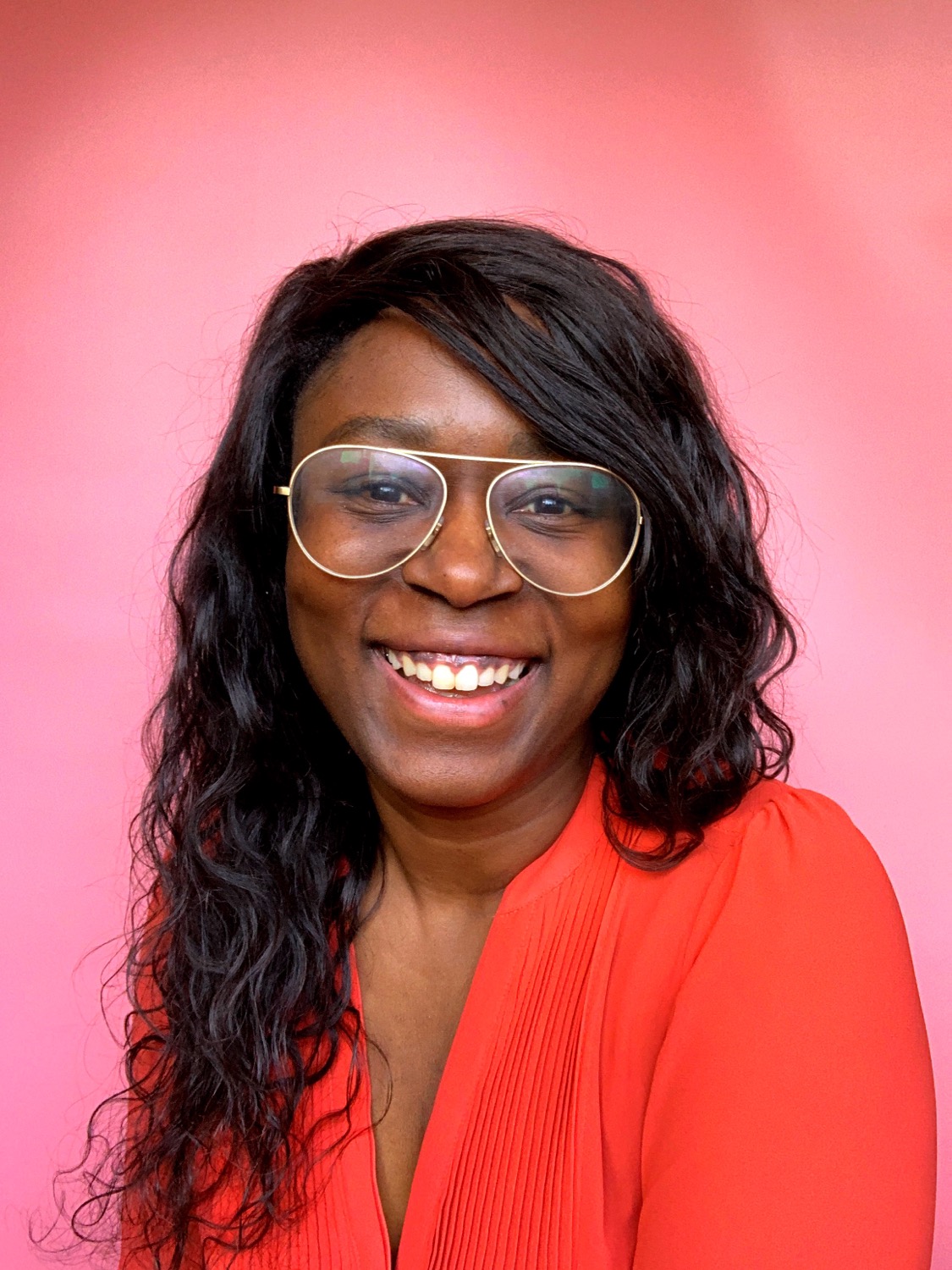
Boardrooms are often seen as places where decisions are made, but as Charlotte Valeur explains throughout this conversation, their real value lies in improving the quality of those decisions.
Charlotte has spent more than two decades working at board level, bringing a perspective shaped by investment banking, governance and a longstanding belief that better leadership comes from better questions. She is also the founder of Board Apprentice, an initiative particularly close to me because I experienced its value first-hand as a Board Apprentice myself.
In this FoundHers Boardroom conversation, we explore what really happens inside decision-making spaces, from the human dynamics that shape decisions long before a meeting begins, to the difference between authority and influence, the importance of cognitive diversity and why curiosity can be more valuable than having all the answers. We also discuss what it means to open these spaces to people who have traditionally been excluded from them, and why changing the people around the table sometimes requires us to rethink the system itself..
Why This Conversation Matters
Boardrooms are often viewed as spaces that sit at a distance from everyday business. They can feel formal, exclusive and difficult to access, particularly for women who have not traditionally seen themselves represented around the table. Yet the decisions made in these rooms shape organisations, industries and, increasingly, wider society.
As I continue to evolve the STYLISA FoundHers platform, I’ve become increasingly interested in the relationship between entrepreneurship, capital and influence. Building a business is one part of the story. Understanding how decisions are made, how governance works, and how influence is exercised is another. If we want more women to shape the future, we need more women in the rooms where that future is being discussed and decided.
There are few people better placed to explore this than Charlotte Valeur. Through her career in governance and her creation of Board Apprentice, she has challenged long-held assumptions about who belongs in the boardroom and how those spaces can become more open, more representative and ultimately more effective. Rather than focusing solely on how to secure a board position, this conversation explores something much deeper: what it really means to influence decisions, ask better questions and create environments where better judgement can thrive..
Please note: A glossary of key terms and acronyms used in this interview is included at the end of this interview, for ease and clarity.

When you first stepped into a boardroom, what did you realise very quickly that you hadn’t fully understood before about how boards actually operate?
The biggest myth about boardrooms is that they’re rational. That myth has survived for generations because we’d like to believe that intelligent people make rational decisions. They don’t. Human beings make decisions, and we’re wonderfully imperfect.
When I first walked into a boardroom after twenty years in investment banking, I thought the best analysis would naturally lead to the best decisions. Instead, I discovered that every boardroom is shaped by human behaviour. Experience, confidence, relationships, fear and unconscious bias all influence decisions long before the meeting begins.
That completely changed how I think about governance. I no longer see it as a set of rules and processes. I see it as creating the conditions for people to make better decisions together..
Board roles are often described in formal terms, but in practice, what do they really require of you on a day-to-day basis?
I used to think experience made the best directors. Today I think curiosity does.
Of course boards need technical expertise, but after serving on boards for twenty+ years I’ve realised that expertise only gets you so far. The directors who add the greatest value are those who remain curious. They ask the difficult questions, challenge assumptions, including their own, and keep learning. The day you believe you already have the answers is probably the day you stop being an effective director.
In your experience, where does power actually sit within a board, and how does that differ from how it is perceived from the outside?
Authority is given. Influence is earned.
From the outside, people often assume power sits with the Chair or the CEO. Sometimes it does. But I’ve seen relatively quiet directors change the course of major decisions simply by asking one well-timed question that nobody else had considered. I will keep repeating how important asking the right questions is! The people with the greatest influence are rarely those with the loudest voice. They’re the ones who help everyone else see the issue differently.

Board dynamics are not always explicit. How have you learned to read what is happening beneath the surface of discussions and decisions?
I listen just as carefully to what’s not being said as to what is.
For years I couldn’t explain why I often noticed patterns or tensions that others seemed to miss. I wasn’t diagnosed as AuDHD until much later in life. Looking back, it helped me understand why I naturally questioned assumptions and connected dots that weren’t always obvious to others.
Different people notice different things. That’s why I’ve become convinced that cognitive diversity isn’t simply about representation, it’s about improving the quality of decisions.
Have there been moments where you’ve had to influence outcomes without holding formal authority in that moment? What did that require of you?
Some of the most important decisions I’ve influenced were made without me being in charge.
Leadership and authority are not the same thing. Over the years I’ve developed a simple way of thinking about leadership. First, we lead ourselves. We can choose to hand that leadership to others, but it should always be a conscious choice. Second, we lead with others. Finally, and I believe this is the highest form of leadership, we create environments where other people succeed.
Founding Board Apprentice came from believing leadership can be learned through exposure and experience, not just appointments.
That’s what great boards do. Rather than creating heroes they create organisations that thrive.
How do you approach the balance between support and challenge in a board setting, particularly when decisions carry significant consequences?
The strongest boards are the ones where disagreement is safe.
Early in my career I thought challenge meant pushing harder. Experience has taught me something very different. People are far more willing to rethink their position when they know you’re trying to improve the decision rather than win the argument. The role of a director is not to prove they’re right. It’s to help the board reach the best possible judgement.
I’ve become much less interested in having the right answer and much more interested in making sure we’re asking the right questions to get to the right decisions. Questions create psychological safety because they invite thinking rather than confrontation.
Can you share an example of a moment where you fundamentally disagreed with the direction of a decision? How did you navigate that?
I’ve learned that being right is far less important than getting the decision right.
Like every experienced director, I have served on boards where I fundamentally disagreed with the direction of travel. Earlier in my career I probably argued harder. Today, I ask more questions. Questions help boards explore disagreement before reaching judgement. If after that I still can not stand behind the direction or the decision, I resign.
All directors should understand that if they stay, they have to back the collective decision, even if they don’t agree. Sometimes the most powerful thing a director can do is slow the decision down to ensure all perspectives are taken into consideration. Equally, delaying decisions unnecessarily can create its own risks.
Good governance is about making sure the board reaches the best possible judgement.

Governance comes with a level of responsibility that extends beyond the organisation itself. How do you hold that responsibility in practice?
I used to think governance was about organisations, today I think it’s about society and the planet.
Every board decision affects far more people than those sitting around the table. Employees, customers, investors, communities and increasingly future generations all live with the consequences. Ultimately, every board decision affects people and the planet, whether directly or indirectly.
Organisations and governments exist only because we all exist, and we all exist because we have a planet to inhabit for each of our brief moments of life. That’s why I take governance so seriously. Not because of regulation or compliance, but because governance determines how decisions are made and whose voices are heard.
When governance works well, organisations create value far beyond financial returns.
There is often an assumption that being “in the room” equates to influence. How true has that been in your experience of boards?
Getting a seat at the table is the beginning, not the destination.
Influence has very little to do with being present and everything to do with what you contribute once you’re there. That’s one of the reasons I founded Board Apprentice. I wanted people to see that governance is not mysterious. It can be observed, learned and practised. For too long we’ve selected directors from people who have already sat around board tables. That creates experience, but it can also create sameness. Fresh perspectives always strengthen governance.
What has surprised you most about how decisions are actually made at board level?
The biggest surprise is how much decisions are influenced before the meeting even starts.
Board papers are important, but conversations, relationships and trust often shape the discussion long before anyone enters the room. That isn’t a criticism, it is human nature. The role of good governance is not to pretend those dynamics don’t exist. It is to ensure that, when the decision is finally made, every voice has genuinely had the opportunity to influence it. That should also be evident in the minutes, which provide the legal audit trail of the board’s deliberations.
What do you think is most commonly misunderstood about how boards function in practice?
People think boards exist to make decisions. I think they exist to improve the quality of decisions.
There’s an important difference. Almost any group of experienced people can make decisions. The real value of a board is creating constructive challenge, bringing different perspectives together and reducing the risk of blind spots. Compliance matters, but compliance is only the floor of governance, the ceiling is judgement.
You founded Board Apprentice as a way to open up access to boardrooms and governance. What prompted you to create it, and what gap were you seeing at the time?
Board Apprentice wasn’t really about opening boardrooms. It was about opening minds.
For years I heard boards say they wanted directors with different backgrounds, genders and perspectives, but boards would not appoint those people if they didn’t already have board experience. The problem was that those people couldn’t get experience without first being appointed to a board, It was a perfect Catch-22 - possibly one created from traditional board members putting up barriers that couldn’t easily be overcome.
I realised that a system had been designed that excluded talented people who did not fit the traditional profile of a board member. So instead of trying to change individuals, I tried to change the system.
Looking back, Board Apprentice wasn’t just about governance. It reflected something I’ve come to believe throughout my career: if a system consistently produces the wrong outcome, perhaps it’s the system, not the people, that needs redesigning.
Having come through Board Apprentice myself, I saw first-hand how valuable that exposure is. From your perspective, what does that early experience give people that they wouldn’t gain otherwise
I believe that our Board Apprentices learned that they could do the job by being at the table. That being a board member is not rocket science but it does require the ability to ask questions.
They come away with a heightened self-confidence that shapes how they come across when applying for positions.
Many also come away with new ambitions and a desire to push harder in their career. It is truly inspiring to watch so many develop rapidly during and after being Board Apprentices.
It also teaches the host boards something that we rarely mention. It teaches them what it means to have more diversity in the room and the importance of developing a diverse pipeline of tomorrow’s board members. For themselves and for society.
For women who are building businesses and may be considering board roles in the future, what do they need to understand that is not often made visible?
Don’t wait until you feel ready, none of us ever are.
Too many talented women think they need one more qualification, one more promotion or one more year of experience before putting themselves forward. In my experience, confidence rarely comes before opportunity, it grows because of it. I would also encourage women not to try to become “boardroom versions” of themselves. The value you bring isn’t how well you fit the existing board, the value is the perspectives that only you can bring.
I also have a simple rule for life: 8 hours to sleep, 8 hours to work and 8 hours to play. We often celebrate exhaustion as though it’s a measure of commitment. I do not think burnt-out people make better leaders or better decisions. Some of my best thinking has happened away from the boardroom, walking, reading or simply making space to think.
Looking back more broadly, what would have made your own path into boardrooms clearer or more accessible?
Visibility changes possibility.
When I started my career, there weren’t many people who looked like me in boardrooms. A Danish woman from investment banking wasn’t the obvious candidate for a FTSE Chair.
I probably spent too much time trying to understand and observe how the system worked. If I could go back, I’d spend more time asking whether the system itself needed to change.
That’s ultimately what led me to create Board Apprentice and much of the work I’ve done since.
As a woman in boardrooms, have there been moments where you’ve had to navigate being heard or taken seriously? How did you approach that?
I’ve never tried to be the loudest person in the room, I try to be the clearest thinker.
Of course there were moments where I had to earn credibility. Every woman of my generation will recognise that. I have also had moments where I was very clearly discriminated against as a woman. But I learned quite early in my career in dealing rooms that respect is built by consistently adding value. Eventually, in the best environments, people stop noticing your gender and start noticing your judgement.
How have you developed your own way of showing up in the boardroom while remaining aligned with your values rather than existing norms?
For me, showing up in the boardroom has never been about fitting existing norms. It has always been about staying true to my values.
I consciously try to live by four values: collaboration, honesty, transparency and trust. They have guided my decisions throughout my career, even when doing the right thing has come at a personal or professional cost. There have been occasions where standing by those values probably made my career harder, but it has always allowed me to look myself in the mirror at the end of the day.
Being diagnosed with AuDHD later in life also helped me understand why many accepted norms never felt natural to me. I have always questioned practices that didn’t seem logical or fair, regardless of how established they were. Rather than trying to fit into a version of leadership that wasn’t authentic, I learned that I contribute most when I bring my own perspective.
I also never forget where I came from. I grew up in social housing and attended state schools. Although my career has taken me into boardrooms around the world, those beginnings shaped my view of leadership. Titles and success matter far less to me than treating people with respect, acting with integrity and remembering that every board decision ultimately affects real people
Based on your experience, what does it actually mean to have influence in a room where decisions are being made?
Influence is not about changing people’s minds, it is more about expanding them.
The directors I have admired most have not been those with all the answers. They have been the people who ask the question that changes the conversation. Influence comes from asking questions that expand the way people think. That’s something I’ve tried to carry throughout my career. The older I get, the less interested I am in being right and the more interested I am in making sure we are as a board asking the right question. Influence comes from asking questions that expand the way people think.
If there’s one thing my career has taught me, it is that governance isn’t really about organisations, it is about people.
Whether we are talking about companies, governments, AI or society itself, the challenge is remarkably similar. How do we create the conditions for ordinary human beings to make extraordinary decisions together? I think that’s the real purpose of governance, and perhaps that’s the next evolution of leadership, not building stronger organisations, but building better human systems that can hold all human variety for optimal results.
We spend so much of our lives trying to fit into systems that already exist. My career has taught me that sometimes our greatest contribution is to ask whether the system itself is still fit for the future.
A special thank you to Professor Charlotte Valeur, for agreeing to be interviewed for FoundHers Boardroom and becoming a part of the STYLISA FoundHers community. If you’re interested in finding out more about her work:
Connect with Charlotte on LinkedIn
Discover Board Apprentice
FoundHers Boardroom Takeaways
Governance is ultimately about people
One of Charlotte’s strongest messages is that governance is not simply about rules, compliance or organisational structures. It is about creating the conditions for people to make better decisions together. Behind every agenda, board paper and policy are human relationships, behaviours and judgement.
Influence is earned, not assumed
Holding a position around the board table does not automatically create influence. Charlotte reminds us that some of the most significant contributions come from those who ask thoughtful questions, challenge assumptions and help others see an issue differently. Influence is built through contribution, not title.
Better questions lead to better decisions
Throughout the interview, Charlotte returns to the importance of curiosity. Rather than striving to have all the answers, effective leaders continue to ask questions, remain open to different perspectives and create the psychological safety needed for constructive challenge.
Representation strengthens decision-making
Charlotte’s reflections on Board Apprentice highlight that broadening access is not simply about fairness. It is about improving governance itself. Different experiences, perspectives and ways of thinking reduce blind spots and help boards reach better judgements. Diversity is not an outcome; it is a strength.
Systems can be redesigned
Perhaps the most thought-provoking idea running through this interview is that when a system consistently excludes talented people, the problem may not be the people. It may be the system itself. Charlotte’s work challenges us to think beyond individual success and consider how we create opportunities that allow more people to contribute, lead and influence.
FoundHers Boardroom Glossary: September Edition
Because understanding the language is half the battle.
AuHD A term used by some people who are both autistic and have Attention Deficit Hyperactivity Disorder (ADHD). Charlotte reflects on how receiving this diagnosis later in life helped her better understand her own thinking and approach to governance.
Board Apprentice An initiative founded by Charlotte Valeur to provide aspiring board members with the opportunity to observe board meetings and gain practical governance experience. It was created to help break the cycle whereby people were expected to have board experience before being considered for board roles.
Board Papers The reports, agendas and supporting documents circulated to board members before a meeting to inform discussion and decision-making.
Chair The person responsible for leading the board, facilitating discussion and helping directors reach effective decisions.
Cognitive Diversity The inclusion of people who think differently, solve problems in different ways and bring varied perspectives to discussions. Charlotte argues that cognitive diversity improves the quality of board decision-making.
Governance The framework through which organisations are directed, overseen and held accountable. As Charlotte explains, good governance is ultimately about improving the quality of decisions and ensuring different perspectives are heard.
Non-Executive Director (NED) A member of a board who provides independent oversight, constructive challenge and strategic guidance, rather than being involved in the day-to-day running of the organisation.
Psychological Safety An environment where people feel able to ask questions, challenge ideas and express different viewpoints without fear of embarrassment or negative consequences. Charlotte describes this as essential for strong governance and better decision-making.


Comments