STYLISA FoundHers Boardroom July: Dr Emma Guthrie on Why the Future Will Be Built Through Collaboration.

Updated: Jul 24
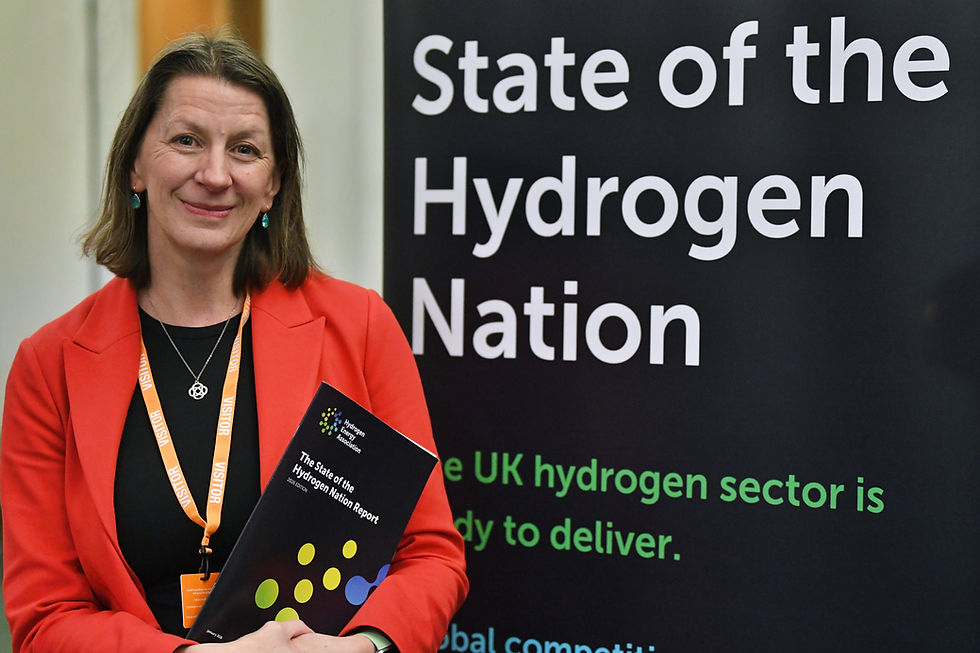
We often hear about the leaders shaping the future, but far less about the systems, relationships and collaboration that make meaningful change possible. As CEO of the Hydrogen Energy Association, Dr Emma Guthrie sits at the intersection of industry, policy, investment and innovation. In this conversation, we explore where influence really sits, how decisions are made, the realities of leading through uncertainty, and why the future will not be built by any one organisation, government or individual, but through collaboration.
Please note: A glossary of key terms and acronyms used in this interview is included at the end of this interview, for ease and clarity.
The energy sector sits at the intersection of industry, policy, investment and public perception. From your perspective, where does real influence actually sit when it comes to shaping the future of energy?
Real influence comes from collaboration. Climate change presents both challenges and opportunities, and no single stakeholder can shape the future of energy alone. Governments have a vital role in setting the policy framework and providing the leadership that gives investors and industry the confidence to act. Companies are ready to invest, create jobs and develop new solutions, while universities play an important role in driving innovation, often in partnership with industry.
Equally important is public engagement. The concept of a ‘just transition’ is a powerful one. Communities can support when they have an understanding of the changes taking place and, where projects are being developed locally, its important to have them involved in shaping them rather than having change imposed upon them.
There is often a great deal of public conversation around innovation, but far less visibility around the decision-making that determines which technologies, industries and ideas are ultimately supported. What have you learnt about how those decisions are really made?
Since joining as CEO of the HEA eighteen months ago, I’ve invested time in understanding the decision making that is driving our sector.
What I’ve observed is that there is rarely a single decision point that determines which technologies succeed. It feels like progress happens when there is a clear and coherent policy environment that investors and industry can have confidence in.
At the same time, it's important to give businesses the freedom to develop innovative approaches to the challenges we face. The most effective outcomes tend to come from striking the right balance between policy direction and commercial flexibility, because that's when investment and innovation can thrive.
Hydrogen continues to generate both optimism and scepticism. In moments where industries are evolving rapidly, how important is leadership that can hold both ambition and realism at the same time?
The hydrogen sector has experienced a cycle of significant optimism and, at times, unrealistic expectations. We’re now entering a more pragmatic phase, where there is a clearer understanding of the role hydrogen can realistically play in the energy transition.
Leadership is particularly important during these periods. It requires the ability to balance ambition with realism, recognising both the opportunities and the challenges. Innovation takes time, and maintaining a long-term perspective helps organisations navigate the inevitable shifts in market sentiment.

Leadership within the energy transition often means balancing commercial realities, political pressures, long-term sustainability goals and public expectation, often simultaneously. How do you personally navigate that complexity as CEO of the Hydrogen Energy Association?
I have the privilege of representing nearly 100 organisations, each with their own role to play in the development of the hydrogen economy. My job is to understand their different perspectives, motivations and strengths, and to ensure their contributions are recognised and understood across the wider energy sector.
When I took on this role, I made a conscious decision to be highly visible and accessible. I spend a great deal of time with members and at industry events, listening to their priorities and challenges. This feels like a valuable use of time, as it helps me represent the sector more effectively and identify opportunities for collaboration.
Much of your work involves bringing together multiple stakeholders with different priorities and perspectives. What have you learnt about influence, negotiation and building alignment in those environments?
No single organisation can deliver the energy transition on its own, and that is especially true in the hydrogen sector. Success in one area builds confidence across the wider market, creating momentum that benefits everyone involved.
I've learned that effective influence and negotiation often start with recognising shared interests. Keeping the bigger picture in mind helps bring stakeholders together and encourages collaboration, even when their individual priorities may differ.
We often talk about innovation as though it exists independently of people, but leadership shapes whether ideas gain traction, receive support or quietly stall. What qualities do you believe are most needed from leaders navigating periods of large-scale transition?
One of the most rewarding aspects of my role is meeting people from across the sector who are contributing their expertise to drive growth and innovation.
The leaders who stand out are those who can clearly articulate their organisation's purpose while remaining open to collaboration. During periods of significant transition, resilience and tenacity are also essential, particularly for smaller innovators working hard to establish themselves in a developing market.
The pace of change across energy, technology and infrastructure can create pressure for constant urgency. How do you balance long-term thinking with the demands of operating in fast-moving environments?
On a personal level, this is one of my biggest challenges. Like many leaders, I can easily become focused on doing rather than thinking.
I've learned that long-term thinking requires intentional time and space. I block time in my diary specifically for strategic reflection and try to schedule it during the parts of the day when I'm most receptive to that kind of work, which is usually in the morning.

As someone operating at board and policy level, have you noticed any shifts in who gets invited into conversations about the future of energy and infrastructure? Where do you still believe progress needs to happen?
It feels to me as if there has been a positive shift towards having a broader range of voices in conversations about the future of energy, including newer technologies, emerging businesses and a wider range of stakeholders.
That said, there is always more progress to be made. The energy transition affects communities, businesses, policymakers, researchers and investors alike, so it's important that decision-making reflects that diversity of perspectives.
Industry associations such as the HEA can play a valuable role by creating opportunities for people to connect, share ideas and contribute to the conversation.
FoundHers Boardroom is focused on the spaces where decisions are actually being made. For women aspiring to operate at that level, what do you think is important to understand about influence, leadership and navigating those rooms?
One of the most valuable investments anyone can make in their career is building and nurturing a strong professional network. Networks provide opportunities to learn, gain support and advocate for others, and they can help unlock opportunities.
For women aspiring to operate at board and policy level, developing skills in influence, communication and leadership is equally important. These are skills that can help you contribute confidently and effectively in the rooms where decisions are being made.
Looking ahead, what conversations do you believe need to happen now if we are serious about building a more sustainable, equitable and future-focused energy landscape?
If we are serious about building a sustainable, equitable and future-focused energy system, we need greater alignment across policy, industry, academia and communities.
My ideal scenario is one where energy policy is clear and consistent, companies have the confidence and freedom to innovate, universities are properly resourced to support research and development, and communities feel informed, involved and heard.
Organisations such as the HEA can help bring those different perspectives together and support the collaboration needed to achieve that vision. It's certainly something worth striving for.
A special thank you to Dr Emma Guthrie, for agreeing to be interviewed for FoundHers Boardroom, and becoming a part of the STYLISA FoundHers community. If you’re interested in finding out more about Emma's work:
Visit the Hydrogen Energy Association website: https://ukhea.co.uk
Connect with Emma on LinkedIn
FoundHers Boardroom Glossary: July Edition
Because understanding the language is half the battle.
Energy Transition The shift from fossil fuels such as coal, oil and gas towards lower-carbon and renewable energy sources to help tackle climate change and create a more sustainable energy system.
Hydrogen Economy A future energy system in which hydrogen is produced, stored and used at scale across sectors such as industry, transport and energy generation.
Just Transition An approach to climate and energy policy that aims to ensure the move to a low-carbon economy is fair, inclusive and beneficial for workers, businesses and communities.
Stakeholders Individuals, organisations or groups that have an interest in, or are affected by, a decision, project or policy. Examples include businesses, government, investors, researchers and local communities.
Policy Environment The collection of laws, regulations, government strategies and political decisions that influence how industries and organisations operate.
Innovation The process of developing and implementing new ideas, technologies, products or ways of working that create value or solve problems.
Commercial Flexibility The freedom for businesses to develop, test and scale new ideas or technologies without unnecessary restrictions, while operating within an agreed policy framework.
Industry Association An organisation that represents and supports businesses operating within a particular sector. The Hydrogen Energy Association (HEA) represents organisations involved in the UK’s hydrogen industry.
Board-Level Leadership Leadership and decision-making that takes place at the highest levels of an organisation, often involving long-term strategy, governance and oversight.
Strategic Thinking The practice of looking beyond immediate challenges to consider long-term goals, opportunities and risks.
ICoSS The I&C Shippers and Suppliers (ICoSS) Group was created in 2009 to provide Shippers and Suppliers who exclusively supply Industrial and Commercial customers a forum for discussing regulatory and legislative changes in the gas and electricity retail markets. Visit their website.
FoundHers Boardroom Takeaways
Influence rarely sits with one individual
Meaningful change often happens when different organisations and sectors work together.
Policy creates confidence
Many financial challenges become harder because they are ignored. Clarity is often the first step towards regaining control.
Leadership is not just visibility
Listening, understanding different perspectives and building alignment are equally important.
Innovation requires patience
The most significant changes often take years rather than months.


Comments