FoundHers Notes: An Equitable Society Must Be Built on Fair Pay
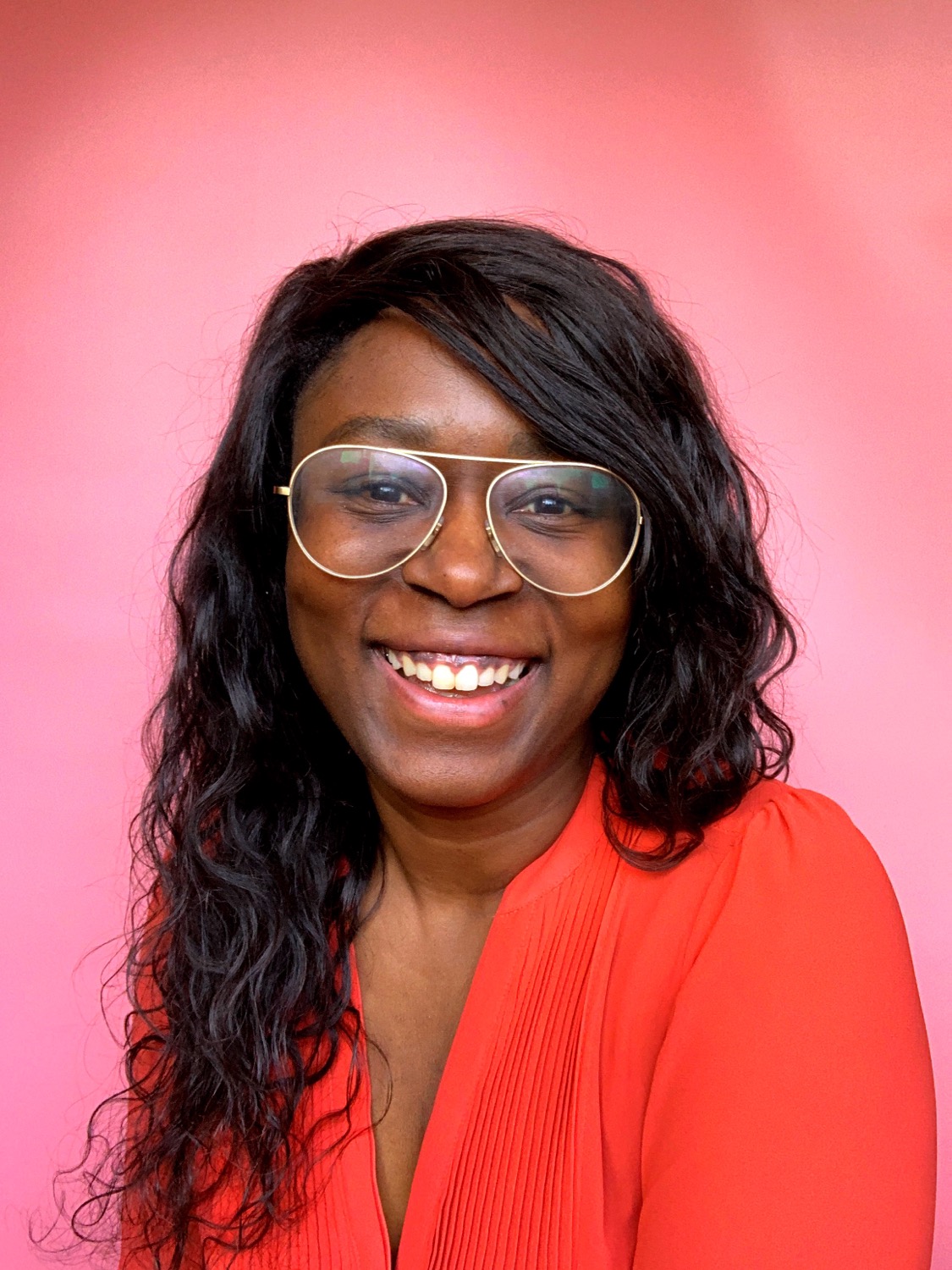
Why we need to examine the relationship between unpaid professional labour, economic empowerment and equality.
Every year, on International Women's Day, my LinkedIn feed is filled with posts from organisations talking about the importance of empowering women, addressing gender inequality and creating more opportunities for women to succeed. Whilst I welcome these conversations, I often find myself questioning the extent to which some of these organisations are reflecting those sentiments in their own professional and commercial practices.
How many of them are asking women to speak at their events, deliver workshops, participate in panel discussions or share their professional expertise for free? It is a contradiction that I find increasingly difficult to reconcile, particularly when so much of the conversation around women's empowerment is about financial independence, economic participation and addressing inequality.
How can we genuinely advocate for women's economic empowerment whilst perpetuating practices that undermine their ability to earn?
Recognising and advocating for our commercial value
I have never believed in working for free. However, there have been occasions throughout my career when I have done so because I believed that the exposure would lead to other opportunities, particularly paid ones.
When I was younger, I also didn't have the confidence to advocate for myself in the way that I do now. That confidence has developed over the course of my career, alongside a greater understanding of how commercial value is established, communicated and perceived.
Having started my career at the age of 16, I have spent 32 years accumulating knowledge, developing skills, building relationships and gaining experience across a number of industries. All of that has required an investment of time, energy and, in some instances, money. Why should I not expect to benefit financially from that investment?
Since becoming self-employed in 2023, the financial implications of working for free have become even more apparent to me. When your income is dependent on your ability to win business, you very quickly realise that exposure won't cover the bills. I understand the value of visibility, probably more than most, given my professional background. Much of my work involves helping people understand how their positioning, reputation and visibility can create access to opportunities. However, I also understand that visibility is a means to an end and that its commercial value should not simply be assumed.
There is a difference between making a strategic decision to invest your time in an opportunity that could benefit you and repeatedly giving away your professional expertise in the hope that someone will eventually pay for it.
Are we contributing to the devaluation of our own expertise?
One of the things I think we need to consider more carefully is the role we play in shaping other people's perception of our commercial value. If people know that you are willing to work for free, what incentive do they have to start paying you?
From a brand and positioning perspective, our decisions communicate something about us. That includes the opportunities we accept, the fees we charge and the boundaries we establish around our professional services. If we consistently make our expertise available for free, we may inadvertently establish an expectation that it will always be available on those terms. Trying to change that expectation further down the line can be considerably more difficult than establishing clear commercial boundaries from the outset.
This is not about suggesting that people who work for free lack value, nor is it about blaming individuals for the way others choose to treat them. There are many reasons why someone might accept an unpaid opportunity, particularly earlier in their career. However, I do believe that we have a degree of responsibility for setting the tone for our professional relationships.
Before accepting an unpaid opportunity, I think it is worth asking ourselves what we are getting in return, whether that return is tangible and whether the opportunity genuinely aligns with our longer-term professional and financial objectives. There is nothing wrong with making a strategic investment in your future, but there should be some consideration as to what that investment has the potential to yield.
Who can actually afford to work for free?
This is where I believe the conversation needs to extend beyond individual choices and into the wider issue of economic inequality. The ability to work for free is not something that is equally accessible to everyone. Someone who has substantial savings, access to family wealth, a financially supportive partner or another source of income may be in a very different position to someone who is entirely reliant on their own ability to earn.
Two women could have exactly the same level of expertise, experience and potential, but very different financial circumstances. One may be able to accept an unpaid opportunity that provides access to influential networks, whilst the other simply cannot afford to do so. If that opportunity subsequently leads to other opportunities, the woman who was already in a more financially advantageous position may find herself further ahead.
When we repeatedly create professional opportunities that require people to subsidise their own participation, are we inadvertently creating another barrier to social mobility? I think this is particularly important when we consider women from marginalised backgrounds, who may already face additional barriers to career progression, wealth accumulation and access to capital.
As a Black woman, I am acutely aware of the importance of looking at gender inequality through an intersectional lens. Women are not a homogeneous group, and whilst there may be similarities in some of our experiences, there are also significant differences. Race, disability, socioeconomic background and caring responsibilities are just some of the factors that can influence an individual's economic circumstances and access to opportunity.
If we are serious about democratising access to opportunity, we also need to consider who can realistically afford to take advantage of the opportunities being created.
The wider economic picture
According to the Office for National Statistics (ONS), provisional figures for April 2026 show that the UK gender pay gap stood at 12.3% across all employees and 6.8% among full-time employees.
Interestingly, the gender pay gap was considerably wider at the higher end of the earnings distribution, standing at 17.3% at the 90th percentile of full-time hourly earnings.
Separate ONS research into ethnicity pay gaps found that, in 2022, median gross hourly earnings for Black, African, Caribbean or Black British employees were £13.53, compared with £14.35 for White employees. The research also highlighted differences according to country of birth. The ONS advises caution when interpreting these figures owing to increased statistical uncertainty.
ONS research into disability pay gaps found that disabled employees earned 12.7% less per hour at the median than non-disabled employees in 2023.
Economic inequality is not simply about what people earn today. It is also about what they are able to accumulate, own and build over the course of their lifetime.
There is a difference between generosity and expectation
I want to be very clear that this is not an argument against charitable work, volunteering, mentoring or giving back. I care deeply about a number of causes and believe there is tremendous value in people choosing to contribute their time, knowledge and resources to things that matter to them. However, there is a fundamental difference between choosing to give your time and being expected to give your professional expertise.
I also appreciate that not every organisation has access to the same financial resources. Smaller charities, community organisations and early-stage businesses may have genuine financial constraints, and there will be occasions when we choose to support them because we believe in what they are trying to achieve.
What I question is the expectation that people should routinely provide professional services without remuneration, particularly when there is a commercial benefit to the organisation requesting those services. If an organisation has allocated money to the venue, catering, marketing, photography and other services associated with delivering an event, why is the remuneration of the people providing the intellectual substance of that event sometimes an afterthought?
And why should someone's commitment to a particular cause be used as a reason to expect them to work for free? I can be passionate about women's economic empowerment and still expect to be paid for my professional expertise. The two are not mutually exclusive. In fact, I would argue that advocating for fair remuneration is entirely consistent with that commitment.
Moving beyond the rhetoric of empowerment
One of the things I am increasingly interested in is the relationship between what organisations say they value and where they choose to allocate their money.
Money can tell us quite a lot about priorities. When organisations talk about empowering women, supporting underrepresented entrepreneurs or creating a more equitable society, I think it is reasonable to examine how those commitments are reflected in their financial decisions.
Who is being paid? Who is being asked to work for free? Who is generating revenue from the initiative? Who owns the intellectual property being created? And who ultimately benefits from the value that has been generated? These are questions that I think we should be asking more frequently.
It is relatively easy to demonstrate support for women through a social media post on International Women's Day. Demonstrating that same commitment through recruitment practices, remuneration, procurement decisions and the allocation of financial resources requires something more substantial.
We cannot measure progress towards equality solely through the number of women featured on platforms, invited to speak at events or included in professional conversations. We also need to consider the extent to which those women are participating in the economic value being created.
For me, that is an important distinction between visibility and economic empowerment.
Personal agency and collective responsibility
I am a firm believer in personal agency and, where we have the ability to do so, taking responsibility for the decisions we make. I would encourage more women to become comfortable with having conversations about money, asking whether opportunities are paid and declining those that do not align with their professional or financial objectives.
There should be no embarrassment associated with asking an organisation whether it has a budget for the professional services it is requesting. It is a perfectly legitimate commercial question. However, I also recognise that not everyone is in a position to decline an opportunity, particularly when they are trying to establish themselves within an industry or gain access to networks that have historically been difficult for them to access.
This is why I do not believe that the entire responsibility for addressing economic inequality should sit with the individual. Organisations also have a responsibility to examine their practices and consider whether the opportunities they are creating are genuinely accessible to people from different economic backgrounds.
Rather than focusing exclusively on equipping women with the confidence and skills to navigate existing systems, perhaps we should be placing equal emphasis on examining the systems themselves. There is a role for both individual and collective responsibility in creating a more equitable society.
Why this conversation matters
One of the founding principles of STYLISA FoundHers is my belief that the future will be better when more women have access to opportunity, influence, leadership and capital.
For me, these things are interconnected.
Money is a tool that has the potential to give people greater agency over their lives. It can enable them to pursue opportunities, invest in their futures, build businesses, leave situations that no longer serve them and make decisions from a place of choice rather than necessity. This is what I mean when I talk about financial optionality, something that I am working towards in my own life.
If we want more women to have that degree of freedom, we need to examine not only the barriers that prevent them from accessing capital, but also the professional and commercial practices that undermine their ability to earn.
I do not believe that every interaction needs to be transactional, nor would I want to live in a society in which people no longer felt inclined to give their time to support others. But I do believe that an equitable society must be built on fair pay, and that we all have a role to play in establishing what is considered acceptable when it comes to the remuneration of professional expertise. As individuals, we need to think more carefully about the value we give away and the expectations we establish. As organisations, we need to consider whether our commercial practices genuinely reflect the values we publicly advocate.
If we are serious about empowering women economically, surely one of the most fundamental things we can do is pay them fairly for their work?
Glossary of terms
Capital: Financial or other resources that can be used to generate value, support economic activity or build wealth.
Commercial value: The economic worth of an individual's skills, knowledge, experience, products or services.
Economic empowerment: The ability to participate in economic activity, access financial resources and exercise greater control over one's financial circumstances.
Economic agency: The ability to make and act upon decisions concerning one's own economic and financial circumstances.
Economic participation: Involvement in economic activity and the ability to benefit from the value generated through that activity.
Financial optionality: Having sufficient financial resources and security to make decisions from a place of choice rather than financial necessity.
Gender pay gap: The difference in earnings between men and women across a workforce. It is distinct from unequal pay for the same work.
Intellectual property (IP): Creations of the mind, including original written work, inventions, designs and other intellectual assets, which may be protected through legal rights.
Intersectionality: A framework for understanding how overlapping identities and structural inequalities can shape an individual's experiences and access to opportunities.
Median: The middle value in a set of figures arranged in numerical order. In the context of earnings, half of employees earn more than the median and half earn less.
Office for National Statistics (ONS): The UK's largest independent producer of official statistics and its recognised national statistical institute. It collects, analyses and publishes data on the economy, population and society, including employment, earnings and pay inequalities.
Opportunity cost: The potential benefit given up when one opportunity or course of action is chosen over another.
Procurement: The process through which organisations acquire goods and services from external suppliers.
Remuneration: Payment received in exchange for work, expertise or services.
Social mobility: The movement of individuals or groups between different socioeconomic circumstances.
90th percentile: The earnings threshold at which 90% of employees earn less and 10% earn more.
Sources and further reading
Office for National Statistics (22 October 2026): Gender pay gap in the UK: 2026
Office for National Statistics (29 November 2023): Ethnicity pay gaps, UK: 2012 to 2022
The ONS advises caution when interpreting estimates for 2020 to 2022 owing to increased statistical uncertainty.
Office for National Statistics (17 October 2024): Disability pay gaps in the UK: 2014 to 2023.
Discover STYLISA FoundHers
Connect with me on LinkedIn


Comments