FoundHer FundHers October: Elisabeth Prager on Breaking the Silence Around Women and Money

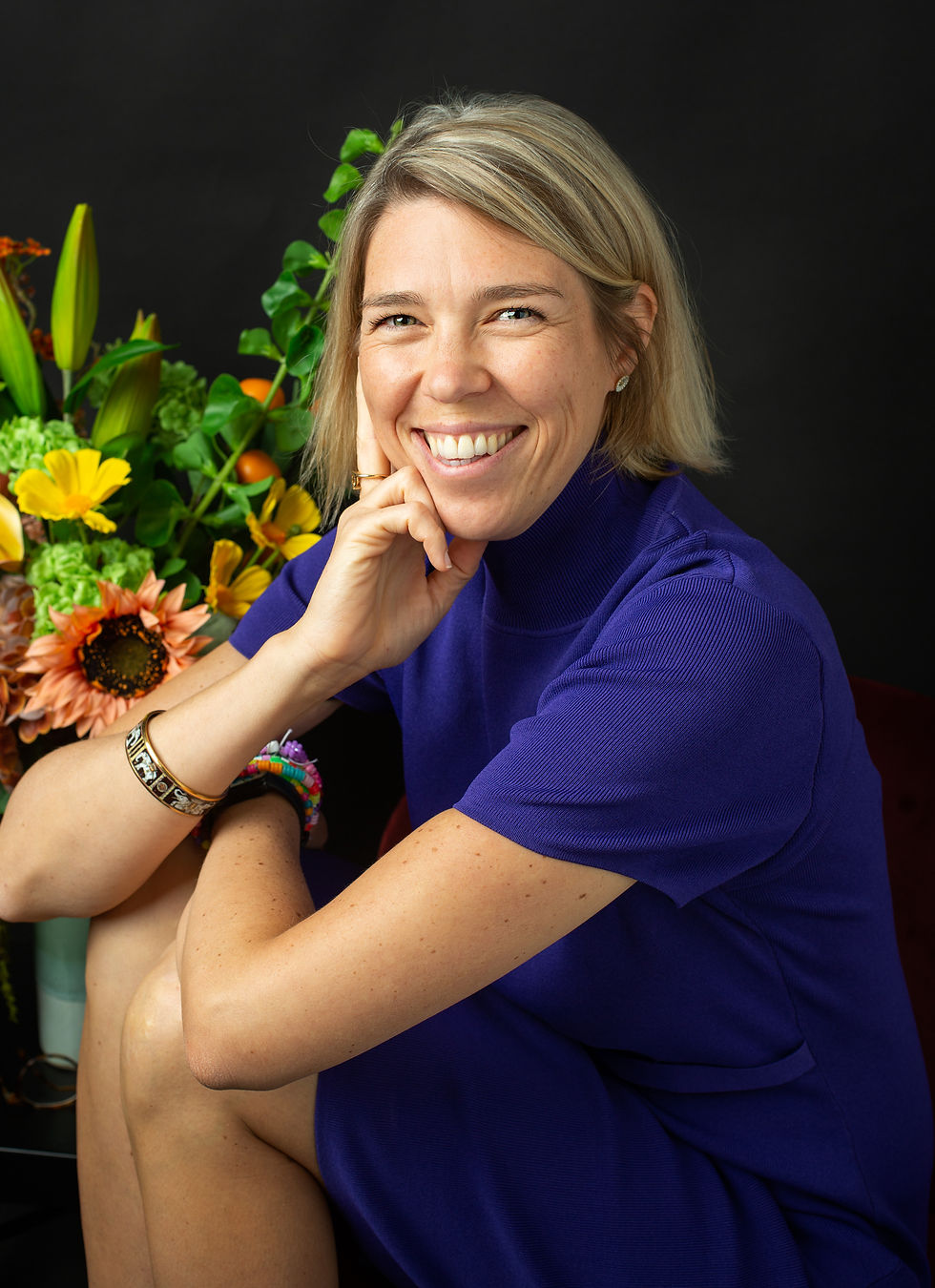
Women are often told that improving their financial futures starts with learning more. But what if knowledge is not the real barrier? Elisabeth Prager, founder of Mad Money Club, believes many women already know far more about money than they give themselves credit for. What is often missing is confidence, permission and a space to speak openly without judgement. In this FoundHer FundHers interview, Elisabeth explores the cultural forces shaping women’s financial behaviour, why community can be a powerful tool for change, and the practical steps women can take to feel more in control of their money.
Why This Conversation Matters
Money is often presented as a numbers game. Learn the terminology, understand investing, contribute to your pension and everything else will follow.
But as Elisabeth Prager explains throughout this conversation, the reality is far more complex.
Many women already know they should be investing. They know they should be thinking about pensions, building wealth and planning for the future. Yet knowledge alone does not always translate into action.
Why?
Because confidence, culture and behaviour matter just as much. For generations, many women have been conditioned to believe that money is something to manage quietly rather than lead confidently. Conversations about salaries, investing and wealth have too often been treated as private, uncomfortable or even inappropriate. That silence has consequences.
This interview challenges that silence.
Rather than focusing solely on financial products or investment strategies, Elisabeth explores the behaviours and beliefs that shape our relationship with money. She argues that confidence is built through conversation, community and permission, not simply through another spreadsheet or financial course.
That message sits at the heart of FoundHer FundHers. The goal has never been to tell women what they should do with their money. It is to make financial conversations more accessible, more honest and more inclusive, so that more women feel equipped to ask questions, make informed decisions and build financial futures on their own terms.
Because when women have greater confidence around money, they gain far more than financial knowledge. They gain options, independence and choice.
Please note: A glossary of key terms and acronyms used in this interview is included at the end of this interview, for ease and clarity.

The Beginning
You've worked across insurance, pensions, private banking and fintech. What are women really up against when it comes to money, that isn't always spoken about?
The maths was rarely the problem. The financial education isn’t either. I think it’s a cultural and social issue.
I spent more than fifteen years inside the system and the thing nobody says out loud is that most women I sat across from weren't all that confused about investing, they knew they needed to do it. But they were lonely when it came to their personal finances. Overwhelmed by the choices. Confused about why nobody has ever spoken to them directly about their own money and shy to bring it up themselves.
Women manage enormous complexities - careers, kids, ageing parents, households. They’re whip-smart and know all sorts of things. But money is the one area where they've been quietly told, culturally rather than explicitly, that it's not really theirs to lead on.
You've said the system wasn't built with women in mind. What does that look like in practice?
It shows up in the small, unglamorous decisions. A pension default that assumes continuous full-time work, which quietly punishes every career break for children or care. A mortgage conversation that addresses the higher earner first, out of habit, not malice. Financial products still marketed with the tone of a maths exam rather than a conversation.
It also shows up in in-person advice culture. Financial advisors have been shown to make eye contact more with men in the advisory conversations. Regardless of who has made the money or brings the wealth on the client side, and amazingly enough, also regardless of whether it is a man or a woman advisor. (https://www.forbes.com/sites/kimelsesser/2020/08/27/financial-advisors-unconscious-bias-works-against-women/) This appears to be an innate ‘behaviour’ we have. To me, it signals a cultural or social system that’s optimised for something other than the reality and it’s a subtle signal that undermines confidence.
Money & Behaviour
You're deeply focused on behavioural science. What patterns do you see in how women approach money, and where do they come from?
The pattern I see most is competence hiding as caution. Women I meet are often further ahead than they think - they've read the books, they have savings, they're asking sharp questions - but they preface everything with "I'm probably being silly" or "this might be a stupid question." That's not a knowledge gap talking. That's decades of being the audience for financial conversations rather than the speaker.
The second pattern is delay dressed up as perfection. "I'll invest once I understand it properly" or “I really need to make sure I make the right choice from the start…” can go on for years, while the same caution rarely stops men from starting before they feel ready. That's not biology. That's conditioning – most women are socialised to be perfect, to be right before they act.
What holds women back more - lack of knowledge or lack of confidence?
Confidence and something else - permission. I've sat with women who could out-argue their financial advisor and still apologise for asking a follow-up question. Give someone a spreadsheet and they'll learn it. Give someone a lifetime of not having the money conversations and not being told that she’s allowed to get it wrong and it’ll still work out, and a spreadsheet won't fix that. That's why Mad Money Club isn't a course first - it's a room first.
For any woman who feels like she's "left it too late" - what would you say?
Late compared to what timeline, and whose? There is no exam. The only bad move is the one you don't make because something kept you from starting. The women who've made the most progress in our community are almost never the ones who started earliest - they're the ones who stopped waiting to feel ready.
There’s also this wonderful story of Anne Schreiber who started investing at 51 years old and became a multi-millionaire. It’s a story not often told, but a good one that I’d recommend everyone who feels they’ve left it too late to read. https://www.fool.com/investing/2025/12/24/the-tax-auditors-secret-to-building-a-22-million-f/
Mad Money Club - Community as a Financial Tool
Why a supper club? What made that the right format?
Because it’s a social and cultural issue. Not a platform or tools one. Very few have ever changed their relationship with money from reading a PDF or downloading an app. Behaviour change happens in rooms, over time, around people who go first. A dinner strips away the performance of a "financial event" - there's no stage, no slide deck, no expert positioned above the table. Everyone’s equal and sharing their insights, mistakes, successes and lessons learned. It’s collective knowledge, where women feel heard, recognised and they realise they aren’t alone. That sparks the curiosity and drives action.
What happens in those rooms that doesn't happen in traditional financial spaces?
Women say things out loud that usually remain unspoken. Their salary, their savings, what they don't have, what they're scared of, what mistakes they’ve made, what they wish they’d known. In a traditional financial setting that's either taboo or extracted clinically by an advisor with a form. At the Mad Money Club table it's met with recognition, not judgement - and that's the moment the shame usually breaks. Once one woman says something vulnerable like "I have no idea what's in my pension," the whole table exhales.
Are there any moments that have really stayed with you?
A recent dinner in Paris has stayed with me for weeks - the theme was investing. A woman spoke about how differently we think about “investing” in a 300 EUR pair of shoes that might be relegated to the back of the closet after being worn once or twice. An investment we make and forgive ourselves for. Yet 300 EUR invested in the stock market – that requires research, a strategy, a risk profile and more. Suddenly it's reckless. We were handed two different rulebooks, and nobody told us they were meant to be the same one. Spending gets to fail quietly. Investing must be right the first time, or it wasn't worth trying.
She said something out loud that we could all recognise in ourselves. A behavioural rational that we’ve all fallen into in our own way. Eyes lit up, heads nodded. We all saw ourselves in her story.
Is community an underestimated tool for financial confidence?
Massively. The industry has spent decades trying to solve financial confidence with information, when the actual blocker is isolation. Confidence is contagious in a room the way it never is alone with a textbook.
Financial Foundations
For women just starting to take their finances seriously - what three things first?
Find a friend or colleague to start talking to. You don’t immediately need to share numbers. Ask how they manage their finances, ask how they talk to their partner about it, ask whether they negotiate or invest.
Then get comfortable with your numbers - income, outgoings, what you actually have and own. Not a guess. A number.
Get your pension out of the drawer you've been ignoring it in. It's very likely one of the biggest assets you own and the one you think about least. It’s the one you’ll be grateful for in the years to come.
What terms should every woman understand but often doesn't?
Compound interest and inflation. When properly understood - not as throw away phrases - but as the actual mechanism working for or against her. It’s so worth using your numbers to play around in a compound calculator or inflation rate tracker to see the real impact. And then "risk," reframed - not as danger, but as the trade-off for growth. Most women aren't risk-averse, they're risk-illiterate, and those are very different problems with very different fixes.
Saving vs investing - how should women think about the balance?
Saving is for certainty - the roof over your head, the emergency fund, the thing you'll need if things go wrong. Investing is for time. The mistake I see constantly is women treating investing like a more serious form of saving, so they wait until they feel "expert enough," and that wait costs them years of growth they'll never get back. Cash feels safe and loses value quietly and continuously. Investing feels risky and is, over time, usually the safer bet for anything beyond a five- to ten-year horizon.

Founder Finance & Risk
What did founding a business (both consulting and fintech) teach you about risk, particularly for women?
That risk tolerance is mostly circumstantial, not innate, and that it can change over time, as you learn and get more comfortable with the decisions you’re making. When I had to make fast, high-stakes calls with real money on the line, I didn't discover I was secretly bold - I discovered that risk becomes manageable the moment you have information and ownership.
Are women genuinely more risk-averse, or is that a narrative we've been conditioned to accept?
This is a big debate – that’s still ongoing and there are many, many factors beyond being a women that impact the debate, so I wouldn’t want to generalise. What I think is more important than looking at the gender difference is recognising that risk tolerance can change with time, education, practice, income / wealth and many more factors – so knowing it’s not static and re-assessing it is more important. And secondly, is that even while there appears to be a tendency for women to be less risk tolerant in investing, this isn’t a bad thing, because it’s actually been shown then when women do invest, they outperform men.
For women building businesses - what financial habits matter most over time?
Pay yourself properly and early, even a small amount - founders who don't do this build businesses that quietly depend on their own underpayment, which isn't sustainable. Separate personal and business finances from day one. And build your own pension deliberately, because nobody is doing it for you once you leave employment - that one gets missed constantly by women founders.
Money, Identity & Legacy
Becoming a parent shifted how you think about money and legacy. How has your definition of wealth changed?
Wealth used to mean options for me - freedom to choose what I do, when I do it and where I do it. It still means that, but the timeline changed. I still think a lot about my own runway now, and alongside that I now also consider what my children absorb by watching how I talk about and behave around money. That's a different kind of wealth-building – an emotional inheritance, not just a financial one.
When you think about legacy now, what does it mean beyond financial assets?
Legacy is such a big word. It’s the ability to make a mark on someone’s life; even only in a small way. It’s the screen shots I get of women who’ve opened an investment account, or changed the assets in their pension. It’s the message I get telling me she’s finally asked for the raise, or had the conversation with her partner. It’s so much more than any financial asset can ever give you, that feeling that you’ve made a mark.
How can women start thinking about legacy earlier, even before they feel "wealthy"?
Legacy isn't a net worth threshold, it's a starting date. The conversations you have with a daughter, a niece, a friend, about money - right now, however modest your own numbers feel - are already legacy. Waiting to feel wealthy enough to talk about it is exactly the silence Mad Money Club exists to break.
Systems, Power & Access
If you could change one thing about the financial system to better serve women, what would it be?
I would love to see financial companies showcase women as investing role models. From advertising that shows men as investors and women as savers, and AI that generates only 2% images of women when ask to show people who are good with money / investors. Also, companies that have model or client portfolios – when I scroll through them, they’re almost all men. So, I would love for these small changes to come in, so that women see investing is for them too.
Where's the biggest opportunity right now for closing the gender wealth gap?
Culture, not product. There are enough investment platforms. What's missing is normalised, unembarrassed conversation - the thing that gets a woman to actually use the products and platforms that already exist. That's a distribution problem, not a product gap.
What role do communities, platforms and storytelling play in shifting the landscape?
Storytelling and community are how permission spreads - one honest conversation at a time. That’s hard for banks or investing institutions to achieve at scale, but it’s something they should embrace or look to embed where possible.
Quick Fire: Money Clarity
One money habit every woman should build?
A money date – ideally with a partner or friends - where she checks her numbers monthly, without flinching and sets aside time for the admin.
One financial myth you'd like to debunk?
That investing is for people who already have money. It's how you get some.
One thing women should stop doing with money?
Not talk about it. The more we talk, the more we learn, the more we know we’re not alone, the more we know our options. Things just get less lonely and more fun.
One thing women should start doing today?
Ask someone a question related to money and be willing to answer it in return.
Closing Reflection
If a woman reads this and takes just one step, what would you want that step to be?
Again, ask someone a question related to money and be willing to answer it in return.
A massive thank you to Elisabeth Prager, for agreeing to be interviewed for FoundHer FundHers, and becoming a part of the STYLISA FoundHers community. If you’re interested in finding out more about her work:
Discover Mad Money Club
Connect with Elisabeth on LinkedIn
FoundHer FundHers Takeaway:
Knowledge is rarely the biggest barrier. Confidence, culture and permission often have a greater influence on women’s financial decisions than financial education alone.
Waiting for perfection can be costly. Small, consistent action is more valuable than waiting until you feel you know everything before you begin.
Money should not be a taboo subject. Honest conversations about money can build confidence, reduce isolation and encourage better financial decisions.
Think beyond today. Giving your pension, investments and long-term financial security the attention they deserve today can make a significant difference tomorrow.
Legacy starts now. The conversations we have about money today can shape not only our own financial futures, but those of the next generation.
FoundHer FundHers Glossary: October Edition
Because understanding the language is half the battle.
Behavioural Science: The study of how people make decisions and why they behave the way they do. In finance, it helps explain why emotions, habits and social influences often affect our money choices just as much as facts and figures.
Compound Interest: Interest earned not only on the money you originally save or invest, but also on the interest that has already been added. Over time, this can significantly increase the value of your savings or investments.
Financial Confidence: Feeling informed and comfortable enough to make decisions about your money. Financial confidence is not about knowing everything. It is about having the confidence to ask questions, make decisions and continue learning.
Gender Wealth Gap: The difference in wealth accumulated by men and women over their lifetimes. It can be influenced by factors including pay inequality, career breaks, caring responsibilities, pension contributions and investment behaviour.
Inflation: The gradual rise in the cost of goods and services over time. As inflation increases, the spending power of money held in cash decreases unless it is earning a higher return.
Investing: Putting money into assets, such as shares or funds, with the aim of growing its value over time. Unlike saving, investing involves some level of risk, but it also offers greater long-term growth potential.
Legacy: Often associated with financial inheritance, legacy can also include the values, knowledge, opportunities and behaviours we pass on to future generations.
Pension: A long-term savings plan designed to provide income in later life. Regular contributions are invested over time to help fund retirement.
Risk Tolerance: The amount of uncertainty or potential loss someone is comfortable accepting when investing. Risk tolerance can change throughout life as circumstances, confidence and experience evolve.
Saving: Setting money aside for short-term goals, planned purchases or emergencies. Savings generally offer greater certainty than investments but are less likely to keep pace with inflation over the long term.
The gender investment gap: The difference between the number of men and women who invest. Research consistently shows that women are less likely to invest than men, despite evidence suggesting that women who do invest often achieve strong long-term outcomes.
Wealth: More than simply income. Wealth is the total value of the assets someone owns, minus any debts. As Elisabeth discusses, wealth can also represent freedom, opportunity and the ability to make choices about your future.


Comments