FoundHer FundHers August: Kristina Segerqvist on Why More Women Should Consider a Career in Finance
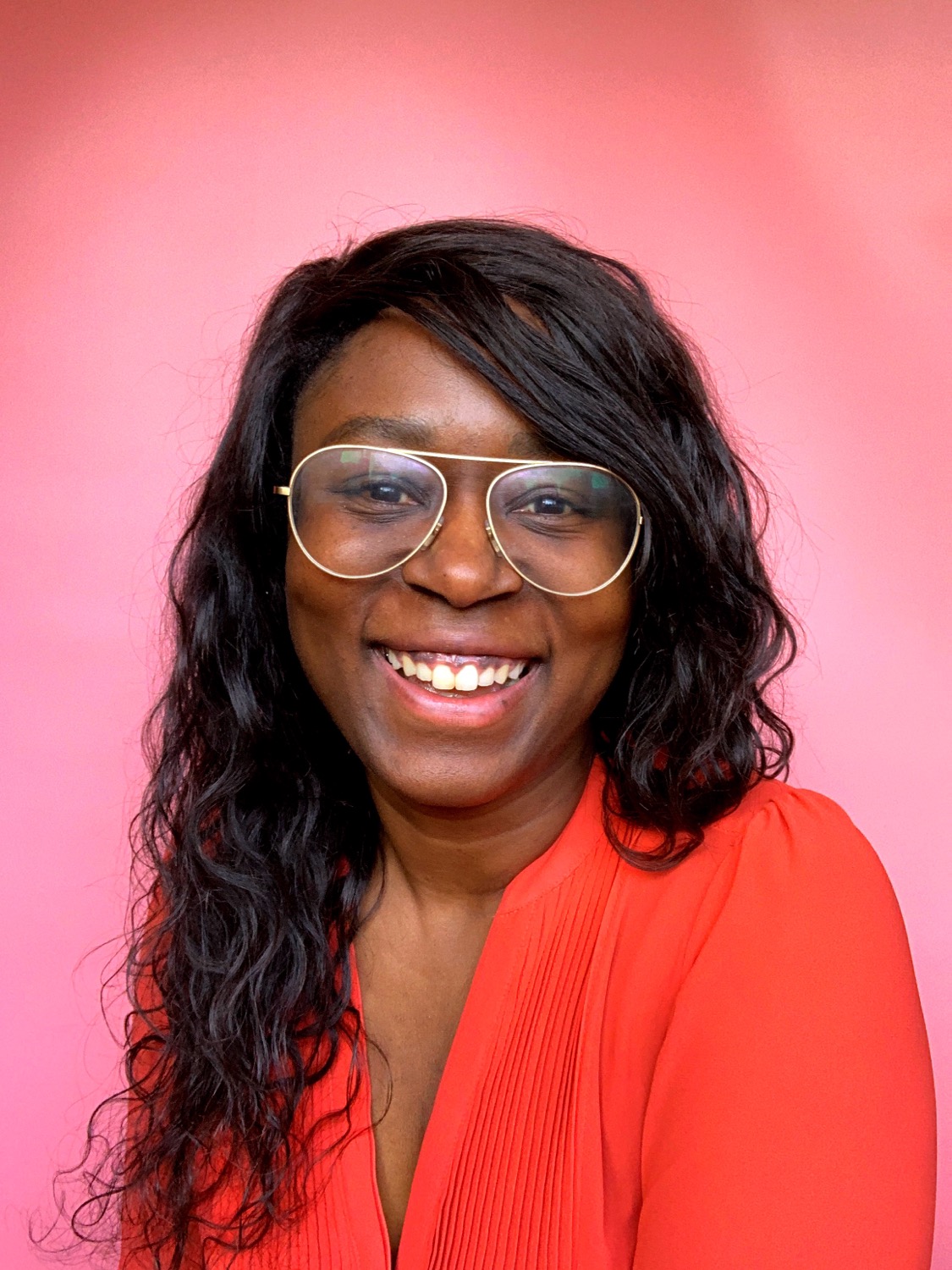
This interview represents an important step in the evolution of FoundHer FundHers.
When I first launched this part of STYLISA FoundHers, my focus was on helping women better understand money through conversations around funding, investment and financial education. Over time, I realised those conversations needed to become much broader.
Understanding money isn’t only about managing it well. It’s also about understanding the systems that shape our financial lives and recognising that women have a place within those systems too.
When I approached Kristina Segerqvist, I expected our conversation to focus on corporate finance. Instead, she introduced an idea that immediately resonated with me: perhaps we should also be talking about finance as a career.
For many people, accounting and finance can feel technical, intimidating or simply “not for them”. Kristina offers a different perspective. She explains why accounting is like learning a language, challenges some of the biggest misconceptions about working in finance and explores the many opportunities a finance career can create, from consultancy and technology to leadership and board roles. If we want more women involved in financial decision-making, we first need more women who can see themselves working within the profession. I hope this conversation encourages more women to do exactly that.
Why This Conversation Matters
One of the things I’ve learnt while building FoundHer FundHers is that improving women’s relationship with money isn’t just about teaching financial literacy. It’s also about helping women understand the environments where financial decisions are made.
When I first approached Kristina, I expected our conversation to focus on corporate finance. Instead, she challenged me to think differently. Rather than only talking about money itself, she suggested exploring the careers behind it and the many pathways that a background in finance can unlock. That shift in perspective felt significant.
Kristina reminds us that finance isn’t simply about numbers. It’s about analysis, communication, leadership, technology and solving problems. More importantly, it’s a profession that opens doors to influence, governance and decision-making.
The more women who understand finance, the stronger our financial confidence becomes.
The more women who work in finance, the more representative the systems surrounding money become.
Those are two different conversations, but both matter. And perhaps that’s the biggest takeaway from this interview.
Please note: A glossary of key terms and acronyms used in this interview is included at the end of this interview, for ease and clarity.

For those who may be unfamiliar with your area of expertise, could you tell us a little about what you do and the role you play within the world of finance?
I work as a consultant in accounting and financial reporting at a large accounting agency in Helsinki, Finland. My area of expertise is group accounting and reporting, as well as developing the financial reporting in companies. The company I am working at specialises in outsourced accounting, payroll, HR services, and IT solutions relating to these fields. The customer base is quite diverse, including big and small companies from several types of businesses, which makes the work quite varied and interesting.
Every career has a story behind it. How did you first find your way into finance, and what drew you to this field?
During my school years, I didn’t have a clear picture of what a university degree in accounting and finance would mean in practice. However, I knew that the degree would give me a good general education and many different career options. I also studied economics, finance and business law. These subjects complemented my accounting studies quite well. Later on, I completed my studies with post-graduate programs and exams, to keep myself updated in the area.
Looking back, was there a moment when finance or accounting really started to make sense to you?
We had an excellent teacher for our first course in accounting at the university: she pointed out that accounting is like a foreign language and taught us the basics. After graduation, I gained more practical experience in accounting and different IT systems utilised in accounting, when I entered a trainee program at a Big4 audit firm after graduation. There I had more experienced colleagues who were coaching us younger ones. That convinced me that I had found an area where I wanted to develop my skills and continue working. Of course the world is constantly changing, and currently AI is changing a lot in terms of the way we work. But the corner stones from the university education have been a good basis to build on.

What does your role involve on a day-to-day basis, and what are some of the key responsibilities that come with it?
I do monthly and quarterly reporting, as well as annual financial statements both for private and listed companies. I often work with a team of colleagues and customer’s own finance personnel, including the company’s CFO. My role as a senior expert includes also following up the latest development and legislation. One example is the current development of digital financial statements for private companies, which is now to be launched widely in Europe. I sometimes also arrange training for my colleagues, participate in IT system projects relating to my field and meet new customers in sales meetings.
You mentioned that accounting is like a language. Could you explain what you mean by that, particularly for someone who is completely new to the world of finance?
A company’s profit and loss statement, balance sheet and cash flow statement together create an overall view of the company’s business, its performance, profitability and financial stability. Learning the basics of accounting - debits and credits, their relation to P&L and balance sheet, and the general rules of the local accounting praxis - enables one to understand those reports. Accounting also forms a basis for internal accounting, which is used for continuous profitability analysis, costs structure analysis, as well as forecasting and budgeting. Corporate finance enables the company find the best solutions for financing their operations, cash management as well as making good investment decisions.
Beyond technical knowledge, what qualities or ways of thinking do you think are most important for someone working in your area of finance?
Accounting is often combined with mathematics, but it is not very high-level mathematics. Instead, I see analytical skills, accuracy and being able to work according to a schedule as important qualities for any person working in accounting and finance. And even though accounting does not appear a very social branch, good social and communication skills are a big advantage. A lot of information from the company’s operations will impact the financial reporting and forecasting. So it is good to get up-to-date information from other people working in the organisation all the time.
What do you think people most commonly misunderstand about working in finance?
The most common misunderstanding is that the work is boring and antisocial. But a lot of accounting work is in fact teamwork, and communication with other departments and operations is important. Also, based on my experience, people working in accounting often have a great sense of humour. 😄
For someone who has never considered a career in finance, what kinds of opportunities might surprise them?
Studies in accounting and finance gives one quite a lot of opportunities to specialise in different fields, depending on what you are interested in. You can either work as an expert in a specific field such as taxation or auditing, work with projects or software development, or have a leadership position within finance.
Some people have made a career as economic journalists. Accounting and finance even gives one a good background for Board of Directors work, if that is something you are aiming for in the future. Furthermore, working in finance and accounting on a daily basis also gives an insight into the overall economic situation in our country and in Europe. That is quite interesting, especially now when the economy is constantly changing.
If someone was starting from scratch and wanted to explore a career in finance, what would be a realistic first step?
This study path probably varies depending on your country. For a young student, applying to a university or university of applied sciences for a bachelor degree in accounting and finance is a good start.
Master level studies can deepen the understanding on the subject later. For someone considering changing career or completing a previously acquired degree with finance studies, I would suggest looking for courses and studies you can do while working at your current job. Are there some open university courses, or online courses available in your country?
Also MBA studies may give a good insight into the area, even though they often focus more on leadership topics. In general, a bachelor exam often gives a good basis to start working within the field. However, as in many other fields, an exam gives you the basis. The practical knowledge is developed while working. I know people who have entered the field with little or no education within accounting and finance, and are learning by gaining work experience within the area.
Finance is often seen as a male-dominated profession. Has that reflected your own experience, and if so, in what ways?
In Finland, accounting has traditionally been seen as female-dominated space, whereas finance, banking, treasury functions and leadership positions have been male-dominated. But this is now changing and both are getting more equal. At my current place of work (an accounting agency), the split of men and women is almost 50/50.
Have you seen a shift in the number of women entering the profession or progressing into leadership roles, particularly positions such as CFO?
There are still fewer female CFO’s compared to male CFO’s, especially in the bigger and publicly listed companies. Luckily this is also changing, and the same applies to Board professionals. There is still lot of growth potential for female participation in those positions.
Why do you think it matters for more women to be working in finance, not just engaging with money, but being part of the systems that shape it?
Women want to be part of development and decision making. Finance decisions are very important in all sizes of companies, so it is important that women are represented there as well. Also my opinion in general is, that the more equality we have in organisations, the better the atmosphere at work places tends to be.
How is AI changing the world of finance from your perspective, and what does that mean for people entering the field today?
AI is probably going to remove many routine tasks in the field in a quite short period of time in the future. However, AI is only a tool, although a very efficient one. It is important to understand the rules and basics behind the accounting, to be able to utilise AI in the best possible way. It is also good to keep in mind, that the economic data is often confidential. Therefore, utilising open AI solutions such as ChatGPT for analysing and summarising the data, is not possible or recommended today. But of course the AI tools are developing and the data security problem will not take long to resolve.
Has your experience working in corporate finance influenced how you think about your own personal finances or investments?
Yes and no. I started to get interested in investing and savings only at a later stage of my career. My studies and experience from work have given me some basic understanding of investment objects - eg. which ones carry higher risk and which ones carry lower risk. And due to my job, I do follow financial news. But working in accounting and finance is still a bit different than handling one’s personal finances. I do have a monthly budget that I follow, and I follow up some costs on an annual basis, but I don’t use a lot of my spare time to do that.
How has your definition of wealth changed over time?
The current political environment in my country is shifting towards less public services, and more responsibilities transferred to individuals. So I have started to see money as a way of securing health care and better living standards, when getting older. I've also started to realise that our most valuable asset is time. Money can give us freedom to decide how we want to use our time later in our lives.
Based on your own journey and experience, what would you say to women who are curious about finance, but don’t see it as something that’s “for them”?
It is important to find a career path that feels interesting and where you enjoy working! And most important - where you see options for career development the way you want. Some financial skills and understanding the economy are valuable for everyone - especially for women. But of course, not everyone needs to be working within finance: we need women working in all areas of business to create an equal working environment.
On the other hand, I see accounting and finance as an expertise area, where there are lot of openings for women willing to reach high positions, to become Board professionals, or to mentor younger female entrepreneurs to help their companies succeed.
A massive thank you to Kristina Segerqvist, for agreeing to be interviewed for FoundHer FundHers, and becoming a part of the STYLISA FoundHers community. If you’re interested in finding out more about her work:
Connect with Kristina on LinkedIn
FoundHer FundHers Takeaways
Finance is about far more than numbers
Kristina challenges one of the biggest misconceptions about the profession. Finance is just as much about communication, collaboration, analysis and problem-solving as it is about technical knowledge.
Accounting provides a foundation for many different careers
A background in accounting and finance can lead to opportunities in leadership, consultancy, technology, auditing, taxation, journalism and Board positions, making it one of the most versatile career paths available.
Understanding finance creates opportunities for influence
Finance professionals don’t simply report on businesses. They help shape decisions, support strategy and influence the future direction of organisations.
AI is changing finance, but expertise still matters
While artificial intelligence is reducing routine tasks, Kristina explains that understanding the fundamentals of accounting remains essential. Technology is changing the profession, not replacing the need for skilled people.
Representation matters at every level
More women working in finance means more women contributing to the decisions that shape organisations, economies and society. Greater representation strengthens leadership, broadens perspectives and helps create more balanced decision-making.
FoundHer FundHers Glossary: August Edition
Because understanding the language is half the battle.
Accounting: The process of recording, organising and understanding financial information within a business or organisation.
AI (Artificial Intelligence): Technology designed to perform tasks that would normally require human intelligence, such as analysing information, identifying patterns and automating processes.
Auditing: The process of reviewing and checking a company’s financial records to ensure accuracy and compliance with regulations.
Balance Sheet: A financial snapshot showing what a company owns, what it owes, and its overall financial position at a particular moment in time.
Big Four (Big4) Audit Firms: The four largest global accounting and professional services firms: Deloitte, EY (Ernst & Young), KPMG (Klynveld, William Barclay Peat, ) and PwC (PricewaterhouseCoopers).
Board of Directors: A group of individuals responsible for overseeing the direction, governance and major decisions of a company or organisation.
Cash Flow Statement: A report showing how money moves in and out of a business, helping companies understand their financial stability and liquidity.
CFO (Chief Financial Officer): The senior executive responsible for overseeing a company’s finances, financial planning and financial strategy.
Corporate Finance: The area of finance focused on how businesses manage money, investments, funding and long-term financial decisions.
Forecasting & Budgeting: Financial planning processes used to predict future income, costs and business performance, helping organisations make informed decisions.
Financial Reporting: The preparation of reports that show a company’s financial performance and position, helping businesses, investors and stakeholders understand how the company is performing.
Group Accounting: A type of accounting used when a company has multiple subsidiaries or related businesses, combining their financial information into one overall view.
Profit and Loss Statement (P&L): A financial report showing a company’s income, costs and profit over a specific period of time.
MBA (Master of Business Administration): A postgraduate qualification focused on business, leadership, management and strategy.


Comments